Cleaning an Old House Yourself? Four Jobs Where the Local Rules Price You Out
On a pre-war house, the cost of routine cleaning is set less by labor than by access, substrate and the local rule that governs where the runoff goes.
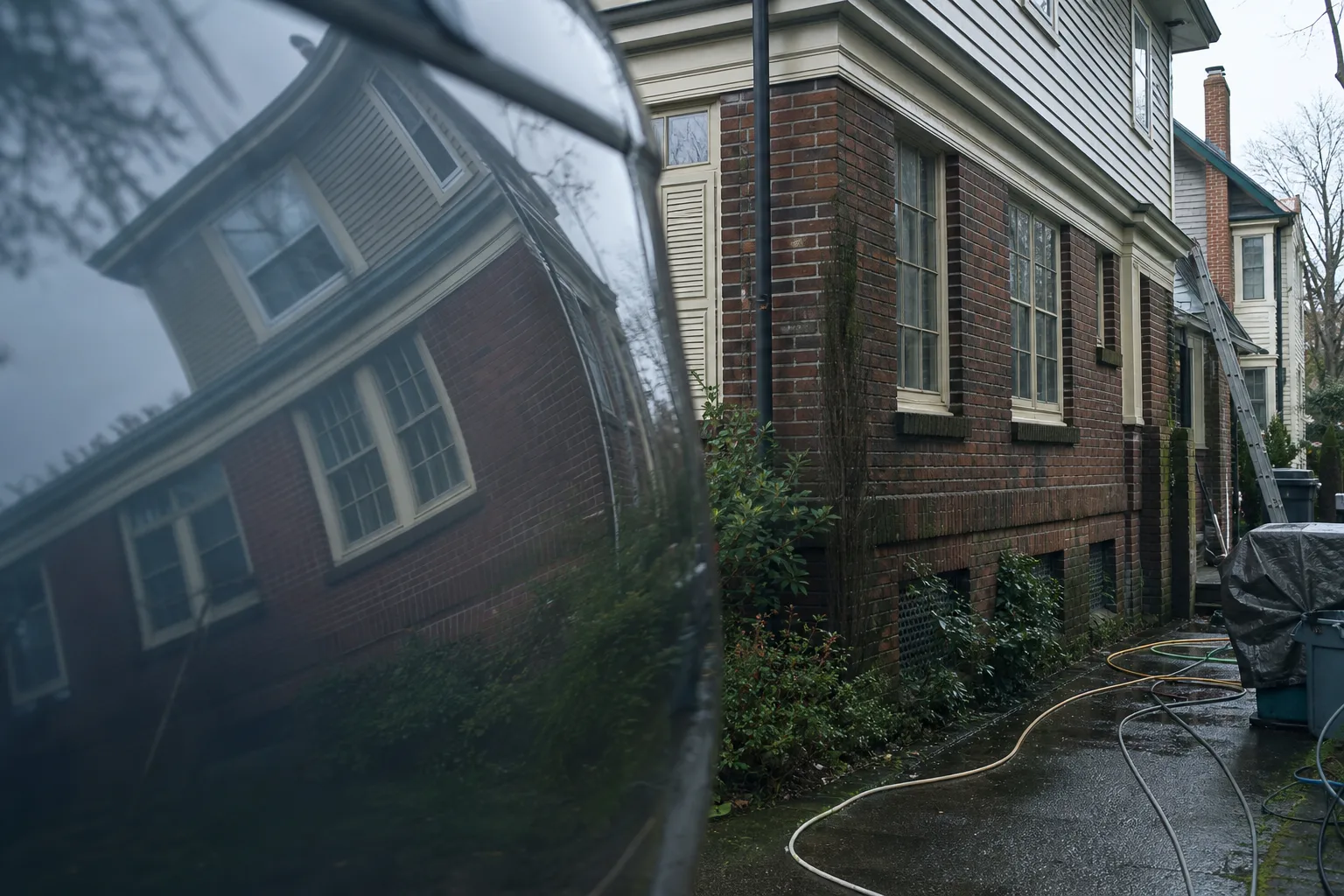
The upkeep jobs that people hand off are rarely the hardest ones. They are the ones where doing it yourself carries a consequence you cannot see at the time: a masonry face that spalls two winters later, dust with lead in it tracked through a hallway, a ladder set at the wrong angle on a soft gutter board. On a house built before the Second World War, and altered three or four times since, the question is not whether you are capable. It is whether the wrong method costs more than the labor you saved.
What sets the number, and it is usually not the hours
Ask three crews to clean the same exterior and the quotes will differ by more than their hourly rates suggest, because labor is the smaller variable. Access is the larger one. A two-story house with a driveway on one side and a hedge on the other is a ladder job; the same house with a slope behind it and no vehicle route becomes a lift rental, a permit for a sidewalk closure, or a rope crew. Substrate matters next: soft lime-mortared brick, painted clapboard and cast stone each want a different pressure, a different dwell time and sometimes a different chemistry. Then frequency, which decides whether you are paying to clean or paying to catch up.
Disposal is the quiet line. Anything that comes off an old building has a good chance of containing lead, and once it is in a bucket rather than a flowerbed, somebody has to take it somewhere and pay by weight. Any estimate that does not mention where the waste goes is either absorbing that cost silently or has not thought about it. When you compare bids, compare those four things: how the crew reaches the work, what they are putting on the surface, how often they expect to come back, and where the residue ends up. The dollar figure follows from those answers rather than the other way around.
Pressure washing, and the town that cares where the water goes
Exterior washing is the job homeowners most often start themselves and most often regret. A consumer machine will strip paint, drive water behind siding, and blast the face off soft brick, and on a house with original mortar the damage shows as a widening joint rather than an obvious wound. A crew that works on old buildings will usually propose low pressure with a cleaning agent and a rinse, which takes longer and looks less dramatic while it is happening. That is the method you are paying for. The wand is not the expensive part.
The rule that varies most from place to place is where the runoff is allowed to go. Wash water carrying paint chips, biological growth or detergent is a discharge, and the Environmental Protection Agency oversees the stormwater program that municipalities administer locally, which means the practical rule is written by your city or county rather than by Washington. Some jurisdictions require that runoff be contained and directed to the sanitary sewer, some require capture and hauling, and some ask only that you keep it out of the storm drain. Coastal and drought-affected areas add water use restrictions on top. A contractor who already works in your town has this priced in; one from two counties over may not.
Anything that makes dust on a pre-1978 house
This is where the case for hiring out becomes hardest to argue with. Houses painted before 1978 are presumed to have lead somewhere in the layers, and on a house from the 1910s or 1920s that presumption is usually correct several coats down. Scraping a porch rail, sanding a window sash, cleaning a stair stringer back to sound paint: each of these makes fine dust in the exact places a household lives. Federal renovation, repair and painting requirements bring in certified firms, contained work areas, specified cleanup and verification, and that certification is a real component of the hourly rate rather than a surcharge.
The regional part is that several states and a number of cities run their own authorized programs with stricter requirements, and a few have added disclosure or clearance testing beyond the federal baseline. Rental property, or a house where a child under six spends time, tends to trigger the strictest version. What this means for your money is straightforward enough: the certified quote will be higher than the uncertified one, and the gap is roughly the containment, the documented cleanup and the insurance. Getting a third-party clearance test afterward is a small cost against the reassurance it buys, particularly if you plan to sell.
Chimneys, gutters and the licensing map
An old chimney is two jobs sold as one. Sweeping removes deposits. Inspection tells you whether the flue liner is intact, whether an early twentieth century unlined stack has been sleeved at some point, and whether the crown and flashing are shedding water. On houses where a coal chimney was later converted to gas and then to a wood stove, the interior rarely matches what the exterior suggests, and a camera inspection is the only honest way to find out. Sweep pricing is fairly consistent within a market; the inspection level and any repair are where the range widens.
Licensing here is genuinely local. Some states license chimney work, others rely on national certification held voluntarily, and municipalities in older housing markets sometimes require a permit for relining. Gutter work follows the same pattern, with the added factor of height: many crews price a third story differently because it changes their equipment and their insurance. Two useful questions cover most of it. Ask who holds the license or certification for this specific scope, and ask for the certificate of insurance naming your address. Both are ordinary requests, and a crew that handles old buildings will have the paperwork ready.
Buying a schedule rather than a visit
Once you know which jobs you are hiring out, the cheapest arrangement is almost always a standing one. A crew that cleaned your gutters last October knows where the valley overflows; a sweep who inspected the flue has a baseline photograph. Repeat work also spreads the setup cost, which on a hard-access house is a large share of the bill. Ask what an annual arrangement looks like, ask what it excludes, and get the exclusions in writing. Old houses reward the owner who buys the same competent visit every year and reads the notes.