Filing a Renters Claim? The Paperwork That Keeps It From Following You Into Renewal
For tenants, the difference between a question and a claim is recorded somewhere. Here is the file to build first, and how a large carrier's claims desk helps you keep the record accurate.
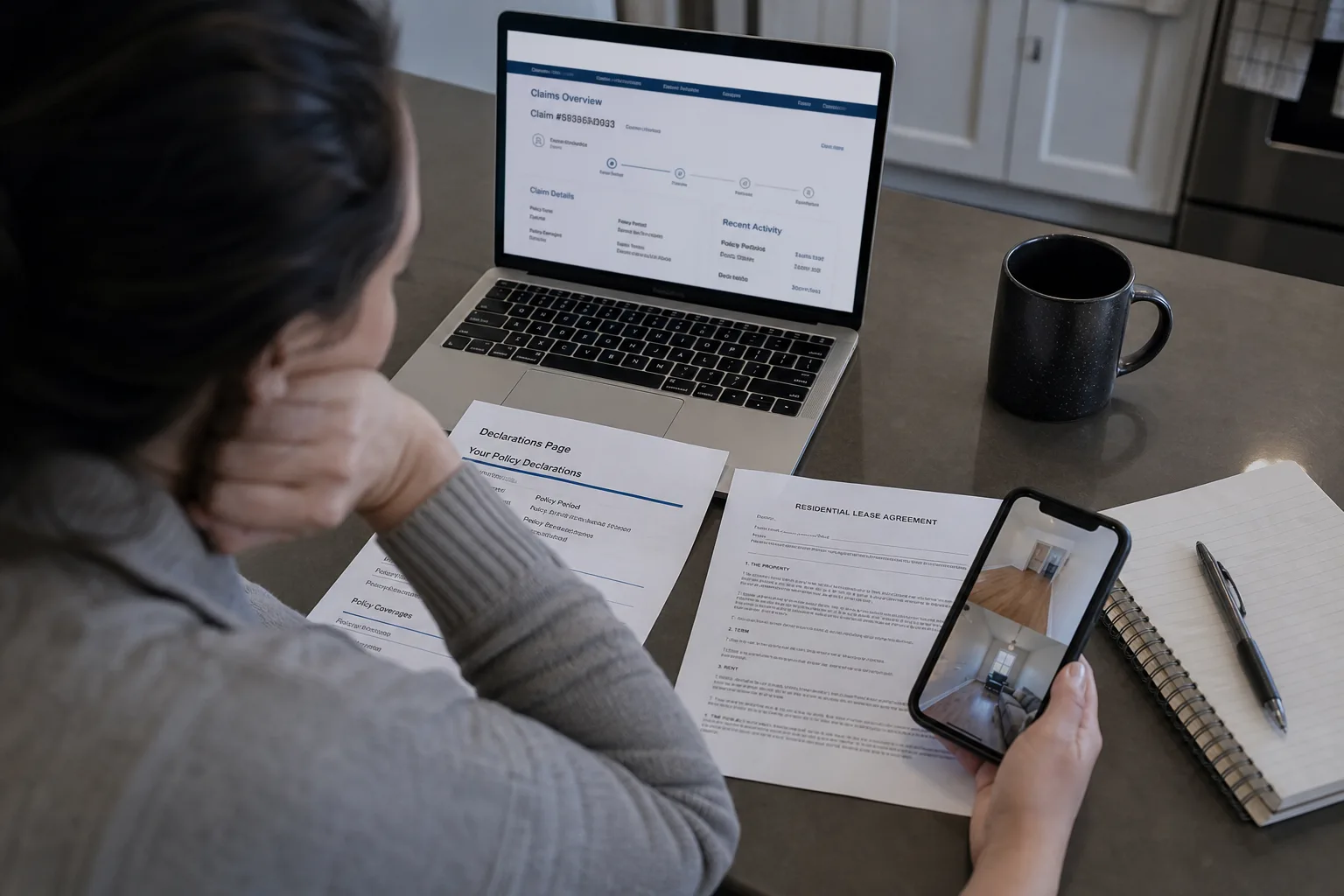
A renter who has just watched a neighbor's washing machine drain through the ceiling has two separate problems, and the second one is invisible for about eleven months. The first is the ruined mattress, the laptop, the boxes in the closet. The second is what the phone call does to the price of the policy next year. Those are handled by different departments, on different timetables, using different records, and the renter is the only person present at both. The paperwork you build in the first week decides how the second problem resolves.
An inquiry and a claim are not the same entry
Carriers distinguish between a general coverage question, a claim reported and later withdrawn, a claim closed without payment, and a claim paid. Those four outcomes are recorded differently, and only some of them carry weight at underwriting. The trouble is that the distinction is made by the person taking the call, not by you, and it is made at the moment you describe the situation. If you open with the address and the date of loss, you have often opened a file. If you open by asking how personal property coverage treats water entering from an upstairs unit, you are usually asking a question. Say which one you are doing.
Larger providers tend to handle this more cleanly than very small ones, because the claims intake function is staffed separately from underwriting and the intake scripts are written to mark the difference. A national carrier will typically give you a reference number for an inquiry and a distinct claim number for a claim, and the two look nothing alike. Ask which one you have been issued before you hang up. Write it down with the date, the time, and the name of the person you spoke to. That single line of notes is the thing you will want if the entry is later described to you as something else.
The file you should already have before anything goes wrong
A renter's claim is a property claim without a building attached, which means almost everything turns on proving what you owned and what it was worth. Photographs of each room, taken slowly, with closet doors and drawers open, cover most of it. Serial numbers on anything electronic, receipts or card statements for anything over a few hundred dollars, and a plain document listing rooms and contents will cover the rest. Store the whole thing somewhere that survives the apartment: a cloud folder, an email to yourself, an external drive at a relative's house. Reconstructing an inventory after a loss is possible but consistently produces a lower number than doing it in advance.
Alongside that, keep three pieces of paper you did not create. Your declarations page, which states your limits, your deductible, and whether your contents are covered at replacement cost or actual cash value. Your lease, specifically any clause requiring you to carry insurance and naming the landlord as an interested party. And, if you can get it, a note of who insures the building, because a loss caused by the structure or by another unit may be the owner's responsibility rather than yours. Property managers of any size will usually provide the carrier name on request.
Why the size of the provider changes what the record looks like
Working with a large insurer or a large property management company means dealing with process rather than people, which is frustrating on a Tuesday afternoon and useful a year later. Portals timestamp submissions. Claim numbers persist. Correspondence is logged whether or not anyone reads it carefully. Adjusters rotate, but the file does not. For a tenant trying to establish that a loss was reported on a particular date, or that a claim was closed without payment rather than denied, the bureaucratic apparatus is the evidence. Ask for everything in writing, use the portal message function rather than the phone when you have a choice, and keep the automated confirmation emails.
That same structure gives you a route to correct things. A large carrier will have a documented procedure for withdrawing a reported claim before an adjuster is assigned, and a documented procedure for requesting written confirmation that a file closed with no payment. Both of those requests are ordinary and are handled by staff who process them daily. Make the request specific: ask for a letter stating the claim number, the date of loss, the disposition, and the amount paid, even where that amount is zero. Keep it with the declarations page.
Checking your own record, and fixing what is wrong on it
Property claims history is compiled by consumer reporting agencies and sold to insurers at quote and renewal. Because those companies operate as consumer reporting agencies, you have a right to see your own file and to dispute entries you believe are inaccurate, the same statutory framework that governs credit reports. The Federal Trade Commission oversees fair credit reporting practices and the conduct of consumer reporting agencies generally. Request your report before you shop for a policy rather than after a quote surprises you. Entries attached to the wrong address, or to a prior tenant, do occur, and they are correctable through the dispute process.
The practical sequence for a renter is short. Confirm what happened and who caused it. Get the landlord's carrier information if the building or another unit is implicated. Establish, in one sentence, whether you are asking a question or filing. Document the loss the day it happens. Request written disposition when the file closes. Then check your own claims record a month or two before renewal, with enough time to dispute anything that reads wrongly and to get quotes elsewhere with a clean file in hand.
None of this makes a claim free. It does mean that when the renewal notice arrives, the number on it reflects what actually happened, documented by you, in a form the next carrier can read.