Fans Gone in Three Days? How to Tell Finished Drying From Fast Drying in a Rental
Water damage that was dried quickly rather than dried properly shows up months later as sticking doors, cupped flooring and a smell in one closet. Here is how a tenant tells the difference.
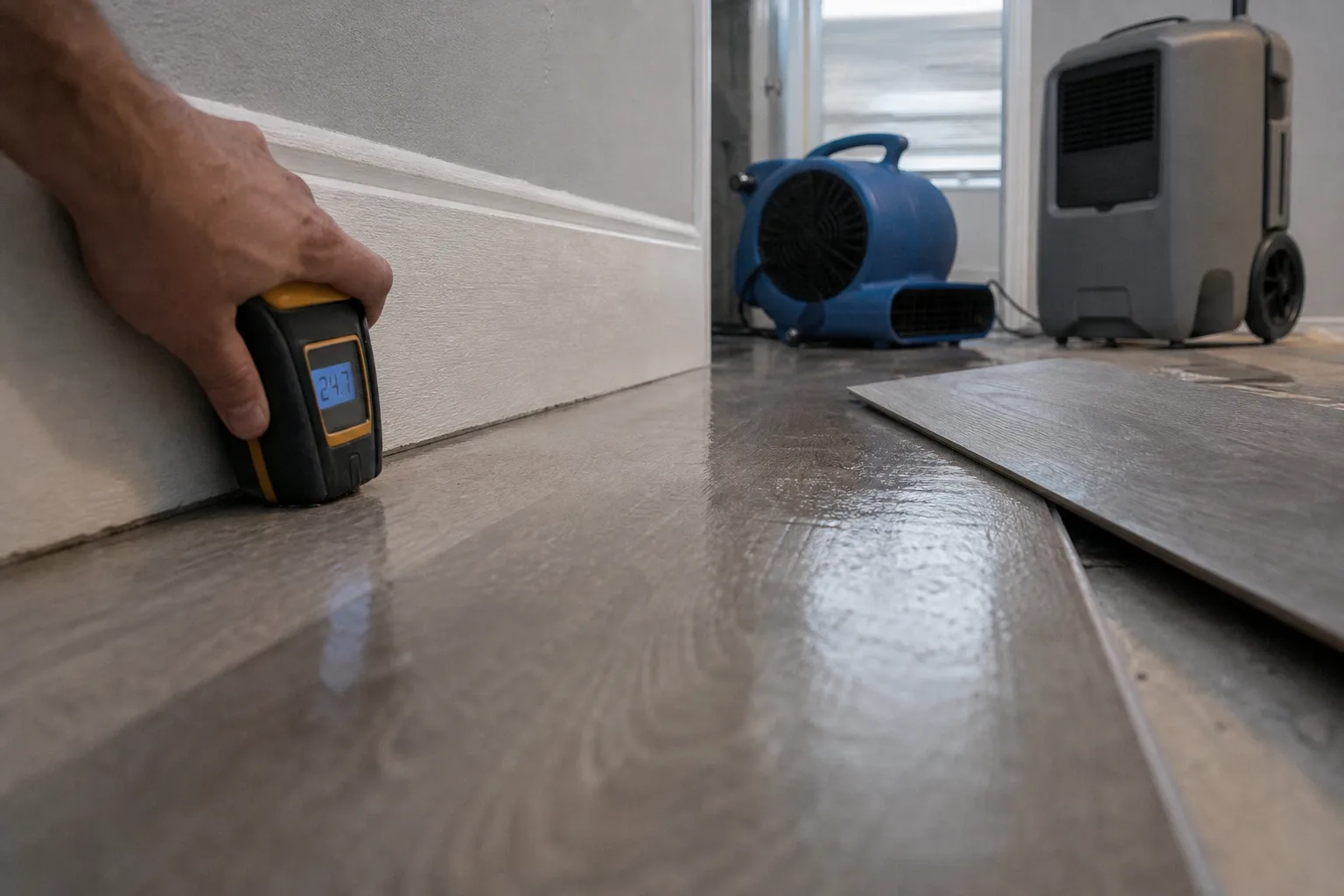
The equipment leaves before the job is finished more often than anyone admits, and the tenant is the one who finds out. Three or four days after a supply line lets go, a crew pulls the air movers, coils the cords, signs a completion sheet somebody in an office approves, and the apartment looks fine. It is not fine. The subfloor under the vinyl is still holding water the surface no longer shows, and the consequences of that arrive slowly enough that nobody connects them back to the week the kitchen flooded.
The bill that arrives eight months later, in a form you do not recognize
Doors that stick in a frame they cleared all last year. A baseboard that has pulled a sixteenth of an inch off the wall in one corner. Laminate seams that have cupped just enough to catch a sock. A closet on an exterior wall that smells faintly of a basement, but only in humid weather, and only if the door has been shut a day. Each of these reads as an ordinary annoyance of an aging building, and each of them gets reported, if at all, as a separate small problem. They are frequently the same problem, which is that water left the surface of a material without leaving the material itself, and the material has been slowly redistributing that moisture ever since.
For a renter, the accounting gets worse from there. Damage discovered late is damage with a disputed cause, and a landlord who paid for a restoration company in March has every incentive to treat a warped floor in November as wear, misuse, or something you spilled. Move-out is where this lands. A deposit deduction for flooring that failed because it was never dried is difficult to argue against once the drying paperwork has been filed and closed, which is exactly why the paperwork matters at the time and not later.
What changed, and why crews now argue about the end point
Restoration used to run on a rough calendar. Set equipment, leave it roughly seventy-two hours, come back, take a reading, call it done. The practice has moved away from that, and the reason is partly instrumentation and partly money. Cheap wireless sensors now sit in a property and report temperature, relative humidity and grain depression to a dashboard, so the drying curve is visible daily rather than guessed at from two site visits. Low-grain refrigerant dehumidifiers pull moisture at lower vapor pressures than older machines could manage. Together those two changes made a different approach affordable, which is drying materials in place instead of demolishing them.
That shift is genuinely good for tenants, because drying in place means fewer weeks of an open wall cavity and less of your kitchen in a dumpster. It also raises the stakes on the end point. When a crew removes the bottom two feet of drywall, the wet material is gone and the question is settled. When a crew dries a wall it did not open, the question stays open until somebody proves it closed, with readings taken from the same points on the same materials over successive days, compared against an unaffected area of the same construction in the same building. That comparison is the whole method. A number on its own means very little.
What a tenant is allowed to do, and what needs asking first
You can open windows, run your own box fans, and move your own belongings out of the wet zone without asking anyone. You can generally run a rented consumer dehumidifier in your own unit, though it is worth telling the landlord in writing that you are doing so, because it establishes that you mitigated rather than sat on the problem. What you cannot do unilaterally is open a wall, lift flooring, cut a baseboard, or drill inspection holes, all of which are alterations to someone else's property no matter how sound the reasoning. Ask, in writing, and keep the answer.
Electricity is the part nobody warns you about. A drying setup of several air movers and a dehumidifier running continuously for four or five days draws real power, and if the unit is separately metered, that power is on your bill. Raise it before the equipment goes in, not after the statement arrives, and ask the landlord to confirm in writing who absorbs it. Many will, particularly when the cause was a building system rather than anything you did, and the request is far easier to make while their contractor is standing in your hallway.
Reading the drying log instead of trusting the smell test
Ask for the daily moisture readings. A competent restoration firm produces them as a matter of course, because insurers now expect the file to show a documented end point rather than an elapsed number of days, and you are entitled to request a copy through the landlord. Look for readings taken at consistent locations, a stated dry standard drawn from unaffected material, and a final set that meets it rather than approaches it. Look for the date the equipment came out. If the last reading and the removal date are the same day and nothing was verified afterward, the file is thin.
Then check it yourself a week later. Run a hand along the baseboard. Look at the flooring seams in raking light from a window. The Environmental Protection Agency is responsible for federal guidance on indoor mold and moisture, and its consistent theme is that the moisture source and the wet material both have to be dealt with, not just the visible water. A tenant who photographs a dry, flat, odorless room seven days after the fans left has documented something useful, and a tenant who photographs the opposite has caught it while the cause is still undeniable.
The window for all of this is short and it is early. Get the readings while the crew is still on site, get the power question answered in writing before the machines run, and take your own photographs a week after everyone has gone. That is perhaps an hour of effort against a deposit, a floor, and a year of small mysteries you would otherwise be blamed for.