Furnace Out in January and the Installer Has Gone Quiet? The Order to Escalate
Winter changes who answers the phone and how fast, but it does not pause the deadlines. Here is the paperwork that keeps a household complaint moving in order.
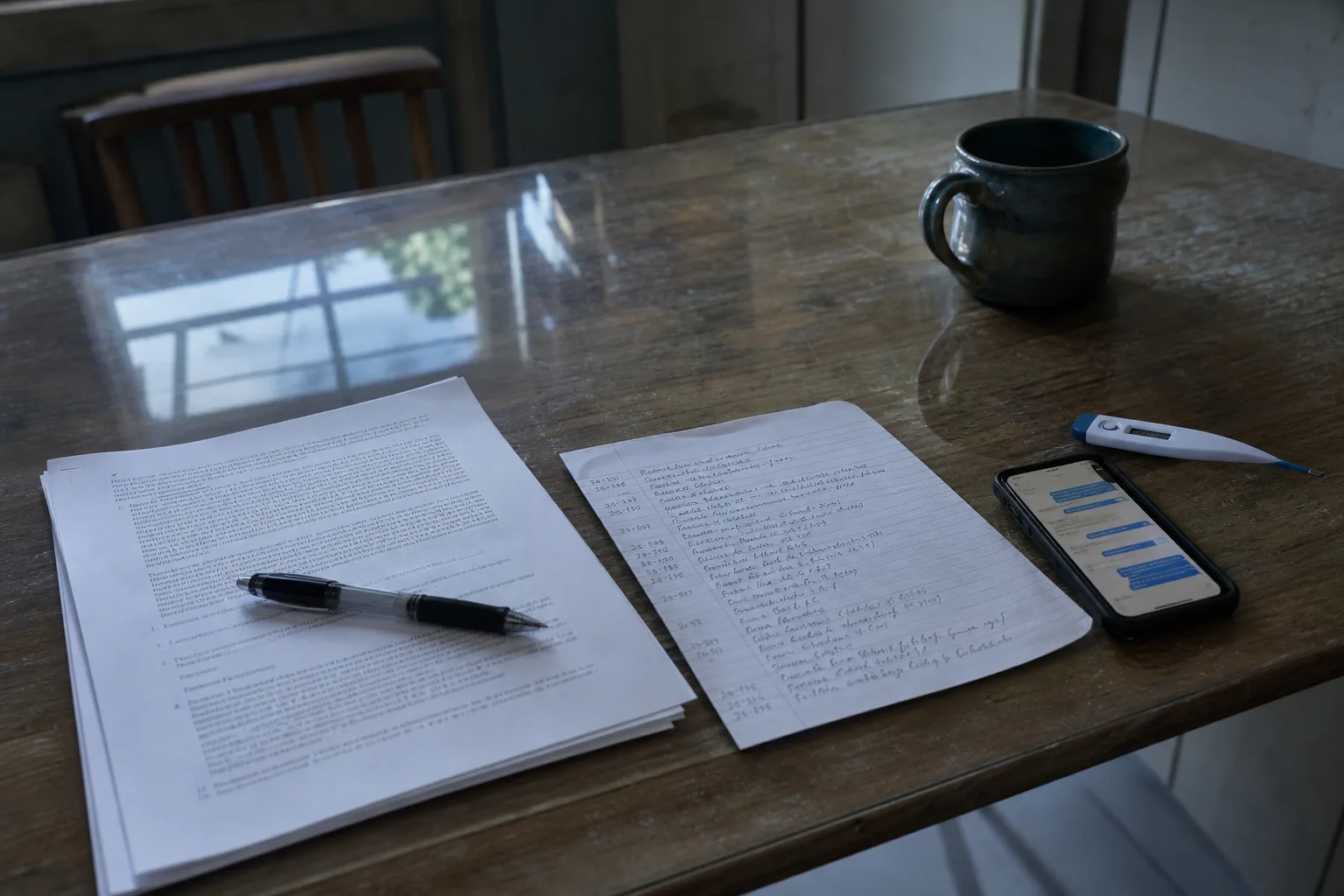
A heating complaint raised in January behaves differently from the same complaint raised in June, and not because anyone is acting in bad faith. The installer is running emergency calls, the manufacturer's technical line is queued, the building department is short-staffed through the holidays, and the household making the complaint is cold, which is the worst condition in which to make careful decisions. None of that changes the sequence a complaint has to follow to stay credible. It changes how long each step takes, and it changes what you should be writing down while you wait.
What the season actually changes, and what it does not
Winter compresses attention and stretches timelines. A contractor who returned calls in two hours in September is now triaging no-heat calls by severity, and a household with intermittent heat sits below a household with none. Manufacturers' warranty departments run reduced hours around the last two weeks of December. Municipal inspectors take vacation in the same weeks. What does not move is the clock attached to your rights: the notice period in your contract, the window a card issuer allows for a chargeback, the statutory deadline for a mechanic's lien or a licensing board complaint in your state. Those run through the holidays without adjustment.
The practical consequence is that patience and inaction stop being the same thing. You can reasonably grant a contractor another week in the middle of a cold snap while still sending the email that fixes the date, describes the defect, and states what you want done. The email costs nothing and preserves everything. If the matter later goes to a licensing board, a small claims filing, or an insurer, the question asked first is almost always when the problem was reported and to whom, and a dated written record answers it in one line.
The folder, built before you escalate anything
Escalation fails more often on missing paperwork than on weak facts. Before the second phone call, assemble one folder, physical or digital, containing the signed contract or proposal with the scope language, every change order, all invoices and proof of payment, the permit and any inspection sign-off, the manufacturer's model and serial numbers, the warranty registration, and the full text of every text message thread. Then write a chronology: one line per event, date first, in plain sentences. Called at 7:40 a.m. Technician arrived 2 p.m. Replaced control board. Heat failed again overnight. That document is the single most useful thing a household can produce.
The chronology does two jobs. It tells you, before you commit to an argument, whether the story you have been telling yourself matches the dates, and it gives whoever you escalate to a version of events they can verify in five minutes rather than reconstruct from a twenty-minute phone call. Keep it factual and keep adjectives out of it. A line that reads "unacceptable delay" invites argument; a line that reads "no response to voicemail of December 27, second voicemail December 30" does not.
The order, and why skipping a rung costs you
The sequence is unglamorous and it works. First, the person or crew doing the work, in writing, with a specific defect and a specific remedy. Second, the owner or office manager of the company, again in writing, attaching the chronology and referencing the earlier contact by date. Third, the party with contractual leverage: the manufacturer if it is a warranty question, the general contractor if a sub did the work, the card issuer or lender if you paid that way and the work is materially incomplete. Fourth, the outside body, which for trade work usually means the state licensing board or the state attorney general's consumer division.
Skipping rungs is tempting in February and it reliably slows things down. Boards and consumer agencies routinely ask whether you gave the business an opportunity to cure, and a complaint that arrives without that history gets bounced back rather than opened. The Federal Trade Commission oversees consumer protection at the federal level and maintains the national complaint intake that state and local enforcers draw on, which is worth knowing about, though it is not where a single stalled furnace job gets resolved. Your leverage is closer to home: the license, the money not yet paid, and the written record.
Evidence that only winter can give you, in an old house
A house built before central heating was standard has been adapted at least once, usually more, and the adaptations are where disputes live. Gravity systems converted to forced air, radiators left on a boiler loop that later got a new burner, ductwork threaded through balloon-framed walls that were never insulated, a chimney relined for one appliance and then asked to serve another. When a contractor says the house is the problem rather than the work, the season gives you a way to test that claim with numbers instead of opinion.
Put an inexpensive recording thermometer in the coldest room and one near the thermostat, and log outdoor temperature from a public source for the same days. Photograph the equipment nameplate, the flue connection, and any visible condensation or staining, with the phone's date stamp intact. Keep the utility bills for the same months in the prior two years. If the installed capacity was sized from a load calculation, ask for that calculation in writing; if none was done on an old house with unknown insulation and original windows, that omission is itself a finding, and it belongs in the chronology rather than in an argument on the phone.
A second opinion is worth paying for in exactly one form: a written report from another licensed contractor, describing what is installed, what is wrong, and what correcting it would cost. Verbal agreement from a friend in the trade persuades nobody. A three-paragraph report on letterhead with a license number changes the tone of every subsequent conversation, and it converts your complaint from a dissatisfaction into a quantified claim, which is the form that boards, insurers, and courts are built to process.
Cold weather makes the problem urgent and the remedy slow, and the gap between those two speeds is where households either build a record or lose one. Send the email the same day you make the call. Date every photograph. Keep the chronology current while the details are fresh, because by March the memory of which technician said what will have gone, and the folder will be the only version that survives.