Signing Up for Preservation Carpentry? The Tool List and the Field Semester Decide Your Real Bill
In a two-year preservation carpentry program, the costs that are not tuition sit in the tool list, the field semester and the consumables, and all three can be priced before you enroll.
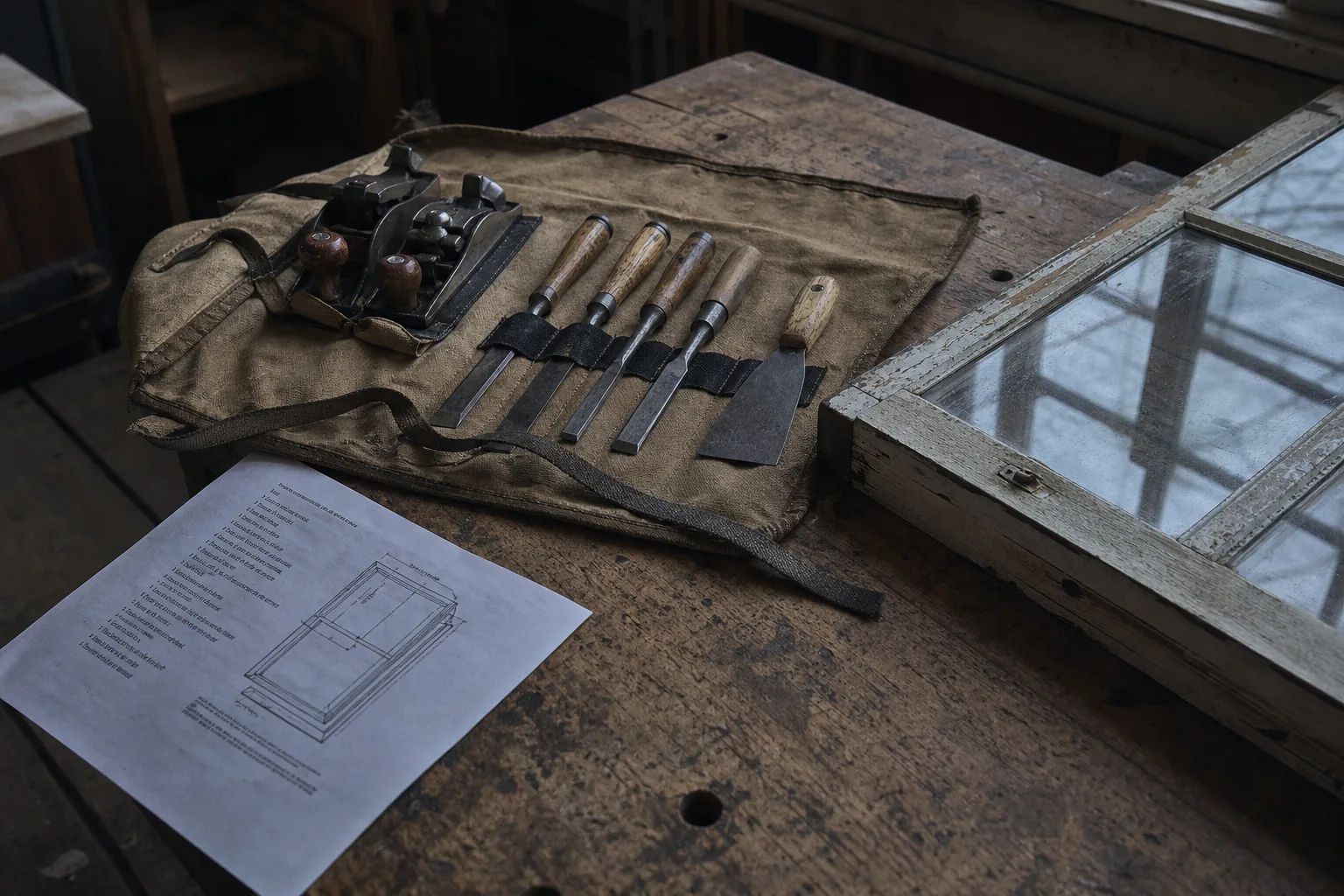
Tuition for a two-year preservation carpentry program is usually the most precise number in the enrollment packet and the least useful one for planning, because it is fixed, published, and small relative to what the program will ask you to buy in the first eight weeks. The costs that move are the tool list, the travel to whatever building the class is working on, and the consumables that go through your hands and do not come back. I want to take that single narrow case, a hands-on trades program built around field work on old buildings, and show where the money actually goes before you sign anything.
The tool list is a purchase order with a deadline
Ask the program for its required tool list before you accept a seat, and read it as a bill rather than a syllabus. In a preservation program the list is longer than in general carpentry, because the work involves hand tools that framing crews retired decades ago: rabbet and hollow planes, a set of mortise chisels, a coping saw, glazier's points and a putty knife for sash work. Some programs bundle a kit and add it to your account. Others hand you the list and a date. The difference between those two arrangements can be several hundred dollars and it is knowable in advance.
Price the list yourself, item by item, at a local supply house and at two online sellers, and note which lines specify a brand and which say only what the tool must do. That distinction matters more than any single price. A required brand of chisel is a fixed cost. A line that reads simply as a smoothing plane is a decision you control, and a serviceable used one bought early in the summer usually costs a fraction of a new one bought in a panic the week before the term begins. Instructors will often tell you which lines tolerate a used tool.
The field semester is where lodging and mileage land
Most programs of this kind put students on a real building for at least one term, and that building is rarely across the street from the shop. Ask three questions in writing: where the current cohort is working, how they get there, and who pays. The answers vary by program and sometimes by year, since the site depends on whatever restoration project a partner organization has funded. If the site is an hour out, you are buying gas and a vehicle reliable enough to be somewhere at seven in the morning in February. If it is farther, you may be buying lodging for weeks.
This is also where the published cost of attendance becomes worth reading closely. The Department of Education oversees federal student aid, and the cost of attendance figure a school publishes is the basis on which aid is calculated, which means it includes allowances for transportation and living expenses alongside tuition. Those allowances are averages built for a typical student, not a forecast of your commute. If your field placement sits well outside the assumed radius, the financial aid office can tell you whether a documented increase in travel costs can be reflected in your own budget rather than the standard one.
Consumables, clearances and the recurring small items
Consumables are the line most students underestimate, because each purchase is minor and the frequency is not. Abrasives, blades, linseed oil and turpentine, hide glue, epoxy consolidant, rags, respirator cartridges, gloves. Work on painted pre-1978 buildings adds lead-safe practice, which means disposable suits, plastic sheeting and cartridge changes on a schedule rather than when they feel spent. The Occupational Safety and Health Administration is responsible for workplace exposure standards, and a program teaching to those standards will be specific about protective equipment, which is helpful: specific requirements can be priced, while vague ones cannot.
Then there are the one-time administrative costs that arrive as separate small invoices. A background check if you will be working in occupied buildings or on public property. A tuberculosis test or immunization record. Steel-toe boots that fit well enough to stand in for six hours. A padlock for a shop locker, a tape and a pencil that you will replace repeatedly. None of these is large. Collected into one number and asked about at once, they stop being surprises and become a figure you can set aside in advance.
Build the number before you accept the seat
Write to the program coordinator with a short, direct request: the current tool list, the current field site, the expected consumables spending per term, and any fees billed separately from tuition. Ask to be connected with a second-year student, who will know which tools sat unused and which were bought twice. Take the answers, add the tool total, the mileage or lodging, the consumables and the clearances, and compare that sum to the tuition line. In hands-on trades programs the two are often the same order of magnitude, which is exactly the sort of thing worth knowing before the enrollment agreement is signed.
Everything in that calculation is available on request, and programs that run good field placements are generally used to being asked. The number you build will not be perfect, but it will be yours, arrived at from a list you have read rather than an average someone published.