Renter With a Damaged Apartment? What Separates a Thorough Adjuster Visit From a Fast One
Two adjusters can walk the same flooded rental and reach different numbers. What the careful one does differently, seen from the tenant's side of the door.
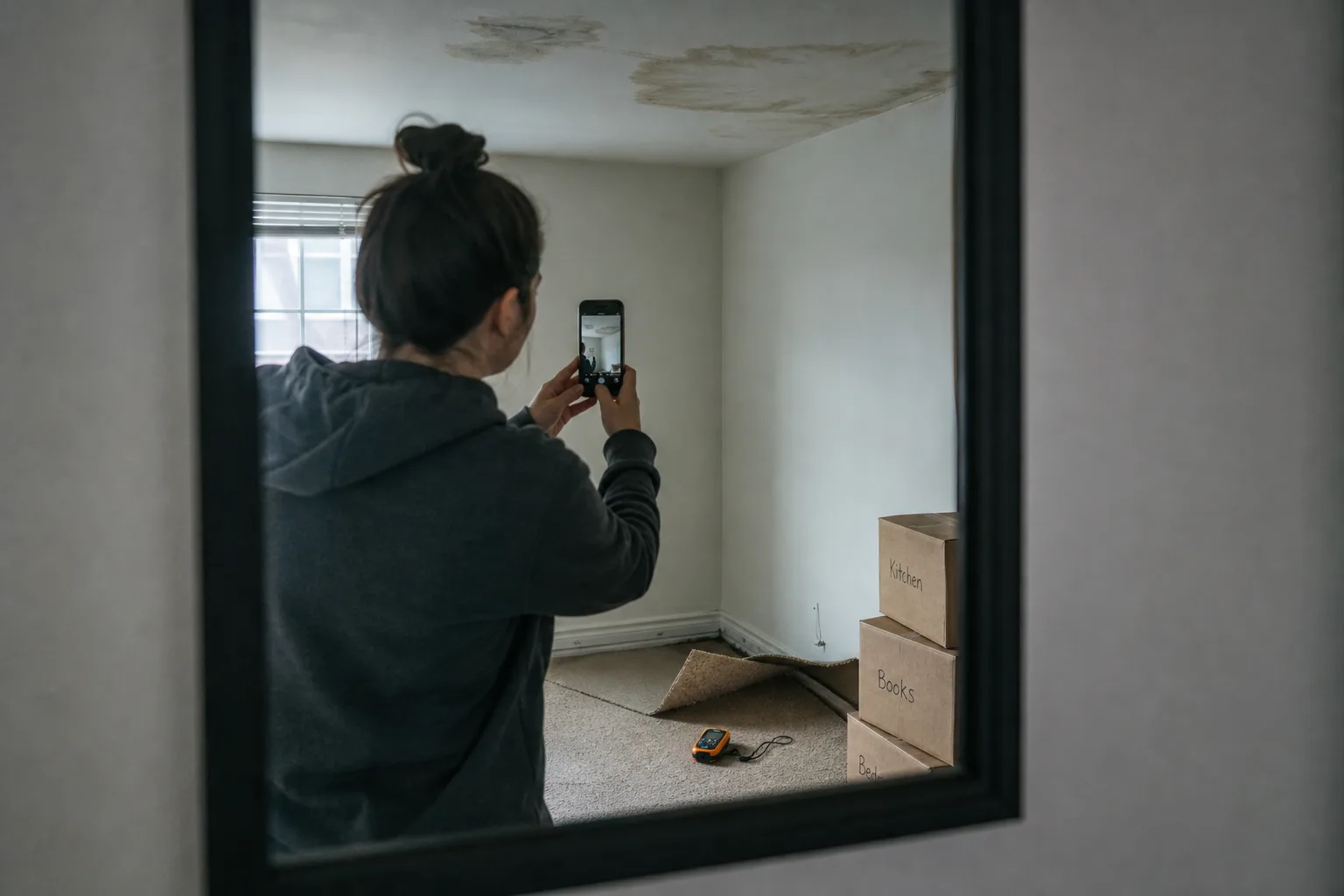
A loss adjuster will spend somewhere between forty minutes and three hours in a damaged apartment, and the difference between those two visits tends to show up in the settlement rather than in anything said at the door. Tenants rarely get a second inspection on the same facts, so the first one carries most of the weight. You are not a bystander in that hour. You are the only person present who knows what was in the closet before the ceiling came down, and how long the bathroom fan had been running wrong. That knowledge is evidence, and whether it reaches the file depends largely on how you organize it.
The adjuster in your unit may not be working for you
There are usually two claims running after damage to a rented home, and they are separate files with separate money. Your landlord's carrier covers the building: drywall, subfloor, cabinets, the structure of the unit. Your renters policy covers your belongings, your temporary housing, and your liability if the damage started with something you did. An adjuster sent by the landlord's insurer is documenting the building's loss and has no obligation to inventory your possessions or to advocate for your displacement costs. When someone knocks, the first question worth asking is which carrier sent them and which policy number they are working under. Write the answer down.
This matters more than it sounds. Tenants routinely hand a full contents list to the building adjuster, hear nothing for six weeks, and discover the list was never in their own file because it was never opened. A good adjuster will tell you plainly that they are not there for your property and will suggest you open a claim with your own carrier that day. A barely adequate one will accept your photographs, thank you, and leave you assuming something is in motion. The distinction costs nothing to detect and can cost several thousand dollars to miss.
What a careful inspection actually includes
The visible mark on the ceiling is the easiest part of the job and the least informative. What separates a thorough inspection is the search for the path the water took and the places it stopped. That means a moisture meter run along baseboards well beyond the stain, readings taken inside the closet that shares a wall with the bathroom, a look at the underside of the subfloor from the unit below if access exists, and a note about whether the carpet pad was pulled or merely walked on. Where mold is plausible, the careful adjuster records humidity and the date drying equipment arrived, because those two facts govern later arguments about who let the damage spread.
Photographs are the other tell. A fast visit produces eight wide shots of a room. A careful one produces wide shots for orientation, then close work: serial number plates, the label inside a sofa, the crushed corner of a box in the closet, the meter display held against the wall with the room visible behind it. You can ask, while the adjuster is standing there, whether they would like a photograph of anything you have moved already, and whether they want the damaged items kept. Do not throw anything out before you have that answer in writing, even a text message.
The contents list is where a renter's claim is decided
Building damage is measured by contractors working from known unit prices for drywall, paint, and flooring, so the range of reasonable answers is fairly narrow. Contents are different. Your belongings are valued from a list you produce, and a list with forty lines will settle lower than the same loss described in two hundred lines, not because anyone is being difficult but because unlisted items are unpaid items. Room by room, drawer by drawer, is the only method that holds up. Note the item, an approximate purchase date, what you paid if you remember, and the brand where it exists. Screenshots of old order confirmations are worth more than memory.
Read the valuation basis on your own declarations page before you build the list, because it changes what you should be collecting. Actual cash value pays the depreciated worth of a five-year-old mattress. Replacement cost pays what a comparable new one costs, though most policies pay the depreciated amount first and release the difference only after you have actually replaced the item and submitted receipts. If yours works that way, keep every receipt from the replacement period in one folder and send them in batches rather than one at a time, which reduces the number of times the file has to be reopened by someone new.
Temporary housing, and the paperwork that releases it
Most renters policies include loss of use, which covers the gap between what you normally spend to live and what you are spending because the apartment is uninhabitable. It is not a blank check for a hotel. It is the difference, so if your rent is suspended or abated while you are out, that abatement is part of the calculation. Adjusters vary widely in how quickly they explain this. The good ones give you a nightly figure they will authorize, in writing, before you book anything, and tell you what receipts they need: lodging folios, restaurant receipts above your normal grocery spending, mileage if your commute lengthened, pet boarding.
Two things keep this part clean. Ask early whether the carrier will pay the hotel directly or reimburse you, because fronting three weeks of lodging on a credit card is a real cash flow problem that a direct-bill arrangement solves entirely. Then ask what event ends the coverage: a certificate of occupancy, a date the landlord provides, or the adjuster's own determination that the unit is habitable. Flood losses follow their own rules, and the National Flood Insurance Program is administered by the Federal Emergency Management Agency, so a flood claim is worth asking about separately rather than assuming it tracks your renters policy.
When the estimate lands lower than you expected
Ask for the line-item estimate, not the summary letter. A summary says a number. The line items say which rooms were included, what quantity of flooring was measured, what depreciation percentage was applied to each category of contents, and where your deductible was subtracted. Most gaps between expectation and offer turn out to be an omission rather than a dispute about value: a closet not measured, a category of clothing recorded as one line, a piece of equipment valued as consumer grade when it was professional. Those are corrected by supplementing the claim with the missing documentation, which is a normal step and not an appeal.
Keep one folder, digital or physical, with the claim number on the front, and put every photograph, receipt, and message in it as it happens. Tenants who do that tend to get their questions answered faster, because the adjuster handling the file can see the whole loss without asking for it twice.