Renting? Five Small Things to Check Monthly, and Who Pays When They Are Missed
How routine upkeep migrated from the landlord's column into the tenant's lease, and the five checks that decide whether a deposit comes back whole.
Standard residential leases now run longer than they did two generations ago, and most of the added length sits in one place: the maintenance clause. Somewhere in the middle of it, usually in a paragraph headed tenant obligations, you agreed to replace filters, keep drains clear, report leaks promptly, and maintain the unit in a clean and sanitary condition. None of that language is decorative. It is the hinge on which deposit disputes turn, because it converts a slow problem you did not cause into a slow problem you failed to report. Five checks cover most of what that clause reaches.
How routine upkeep moved into the tenant's column
For most of American landlord-tenant history, a lease was treated as a conveyance of land rather than a promise about a building, and the tenant took the premises as found. That began to change through the late 1960s and 1970s, when courts and then state legislatures recognized an implied warranty of habitability, obliging landlords to keep essential systems working. The response, over the following decades, was a redrafting of the form lease. Structural and systemic obligations stayed with the owner, as they had to. Routine, low-cost, observable upkeep was pushed outward toward the person living there, along with a duty to give notice.
That is why the modern lease reads the way it does. The landlord owes you a working water heater; you owe the landlord a phone call the week it starts making a new noise. Security deposit statutes, which nearly every state now has, complete the arrangement by drawing a line between normal wear and tear and damage, and damage is where an unreported drip lands after eleven months. I have sat through enough move-out walkthroughs to know that almost nothing on the deduction sheet is dramatic. It is cabinet floors, grout, and filters.
The caulk line where the tub meets the wall
Run a fingernail along the joint between the tub rim and the tile, and along the vertical corners of the surround. You are looking for a caulk bead that has pulled away, gone chalky, or grown a dark line that does not lift with cleaner. That gap is a quarter inch of missing sealant and, behind it, either cement board that tolerates water or drywall that does not. Water entering there does not appear in the bathroom. It appears in the ceiling below, or as a soft patch of baseboard on the far side of the wall, typically several months after the caulk failed.
Re-caulking a tub is the one repair that sits ambiguously between the columns, because it is cheap, cosmetic on its face, and structural in effect. Most leases do not name it. Send a short email describing the gap, attach a photograph, and ask whether maintenance will handle it or whether you may. Both answers are fine. What matters is that the email exists, because it moves the failure from something you tolerated to something you flagged. The Environmental Protection Agency is responsible for federal guidance on indoor moisture and mold, and its consistent theme is that the fix is drying the source quickly rather than treating the stain.
Under the kitchen sink, where particleboard meets a slow drip
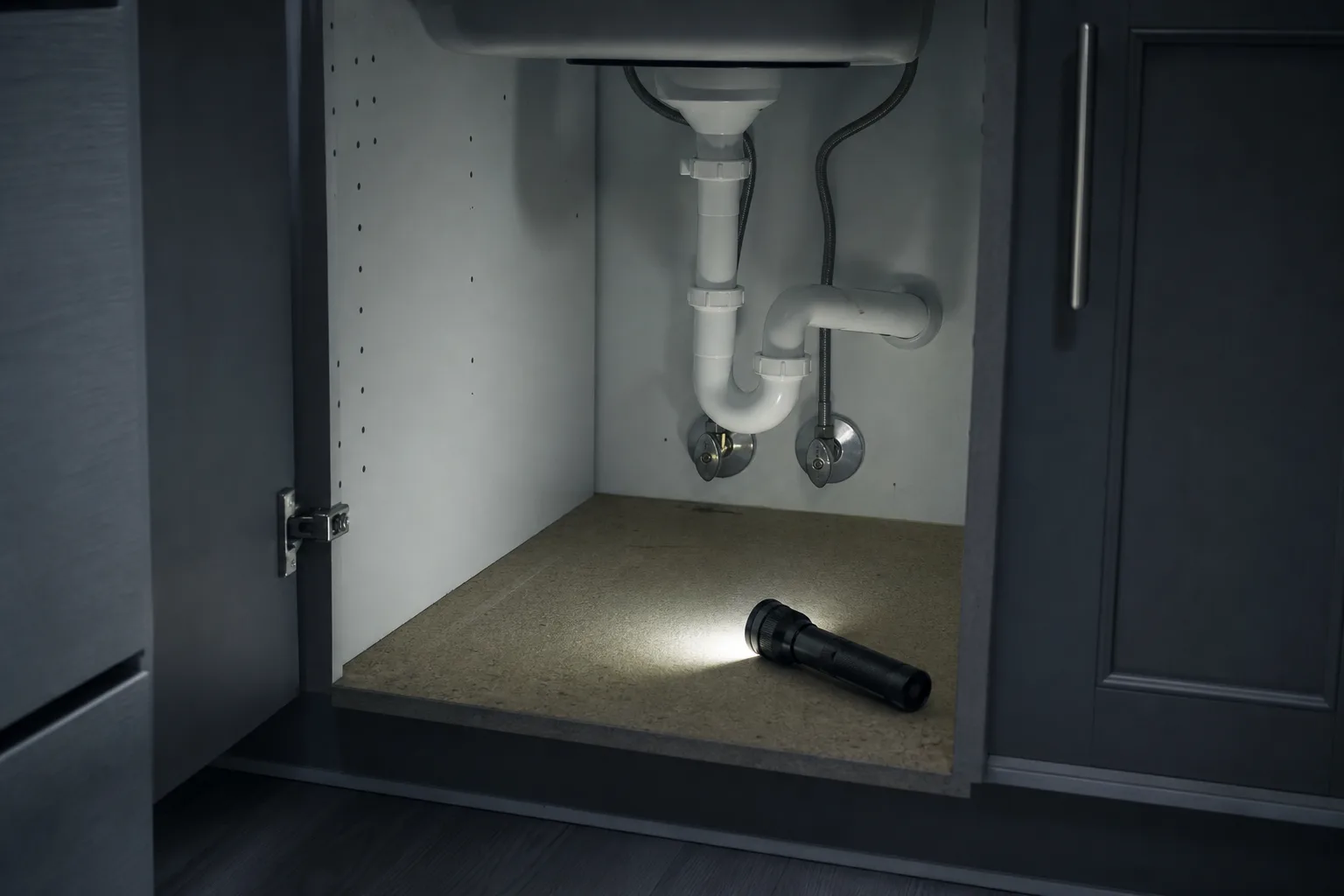
Empty the cabinet twice a year and put your hand flat on the deck under the trap. A supply line weeping a drop an hour leaves no puddle, because the particleboard drinks it. What you feel first is a slight sponginess near the back, then a swollen edge along the seam, then the laminate lifting. By the time the cabinet floor is visibly failing, the repair is no longer a two dollar washer. It is a cabinet base, sometimes a countertop reset, and the line item that lands on your deposit accounting because the drip was inside your unit and nobody told anyone.
Tenants who have moved often learn to check this on the day the keys change hands, before a single box goes in. Photograph the cabinet deck, the trap, the shutoff valves, and the underside of the disposal, and put the images somewhere with a reliable date. That five minute habit has settled more deposit arguments than any argument has. If the swelling was already there, you are documented. If it starts on your watch, you have a baseline that shows exactly when, which is precisely what a landlord's adjuster or small claims judge wants to see.
The filter behind the return grille
Almost every lease that mentions filters puts them on the tenant, and almost every tenant I have known has discovered this in the last month of the term. A loaded filter does not fail loudly. It restricts airflow, which makes the blower work harder, drops the temperature of the coil, and in an air conditioning season leaves you with a frozen evaporator, a puddle in the closet, and a service call the landlord will argue you caused. Filters are inexpensive, sold in the same aisle as light bulbs, and take under two minutes to change once you know the size.
Find the return grille, usually the largest vent in the hallway or ceiling, open it, and read the dimensions printed on the cardboard edge of the filter already in place. Write that number on your phone. Buy several at once. A common interval is every one to three months depending on pets, dust, and how hard the system runs, and the honest test is whether you can see light through it. If the unit has a filter at the air handler instead, ask maintenance to show you where it is; that request is routine and nobody minds it.
A slow drain, and the bottle that makes it more expensive
A tub that takes a minute to clear is early notice, not an inconvenience. The blockage at that stage is hair and soap sitting in the first few inches of the drain, and it comes out with a plastic barbed strip that costs about as much as a sandwich. Left alone, it packs down, extends into the branch line, and eventually becomes a snaking job. Leases that assign drain-clearing to the tenant generally mean this stage. Blockages caused by the building's older piping, tree roots, or a shared stack are the owner's problem, and the distinction is usually visible in whether the neighbors are affected.
The bottle of caustic drain opener is the part worth skipping. It frequently fails to clear a hair mat, sits in the trap, and then greets whichever plumber arrives with a face full of hot lye. Many plumbers will note its use, some management companies prohibit it in the lease, and on old galvanized or thin brass traps it can turn a clog into a leak. Mechanical removal first, a plunger second, and a written maintenance request third is the sequence that keeps the cost where it started and keeps the responsibility clearly documented.
What these five have in common is a window, usually measured in weeks, during which the problem is trivial and the fix is yours to make for a few dollars. After the window closes, the same problem becomes a contractor's invoice and an argument about who let it run. The lease already tells you the rule; the notice you send is what proves you followed it. Keep the emails in one folder, keep the move-in photographs with them, and the walkthrough at the end becomes a short conversation.