Scaffolding Still Up and the Invoice Disputed? Four Routes to a Settlement, Compared
Negotiation, mediation, a licensing board complaint and small claims all end a building dispute, but they cost different amounts of your week and run on different clocks.
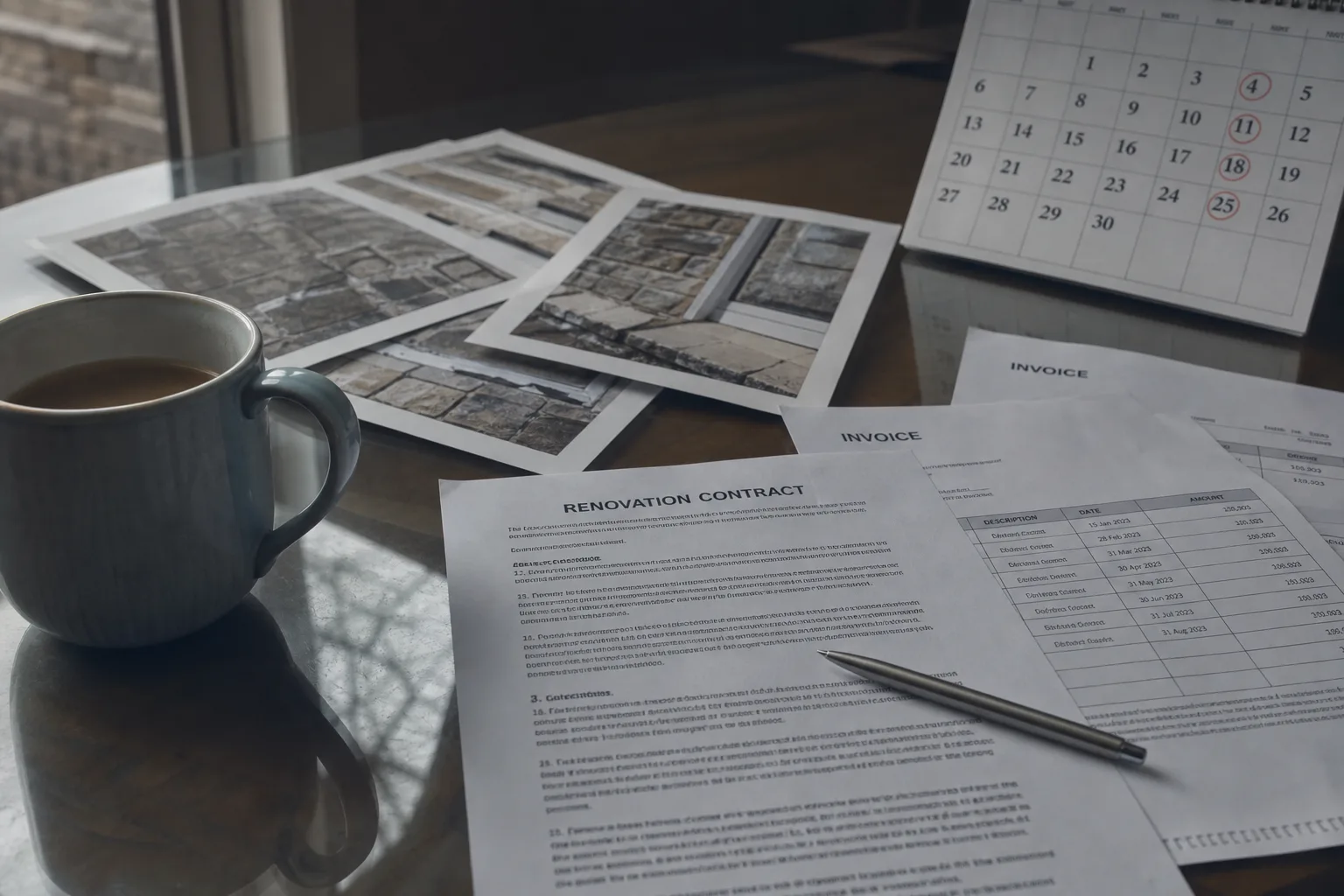
Most disputes over work to an old house do not end in a courtroom, and the ones that do usually got there because nobody wrote down a deadline early enough. The decision to settle is rarely a single moment of clarity. It is a comparison, made on a weeknight with a folder of invoices, between what a further four months of argument would cost and what the other side is currently offering. What follows sets the ordinary routes side by side: what each one demands from your week, what protections attach to it, and which clock is running while you think.
Three clocks, and the one that closes first
Before comparing routes, find out how much time you actually have, because that number caps every option below it. Three deadlines usually run at once. Your state's statute of limitations for breach of contract or for construction defect sets the outer wall, commonly measured in years and counted from a date that is itself arguable. Your contract almost certainly sets a shorter one: a written notice period, a claims window, or a requirement that you give the contractor an opportunity to return and fix the work. Many states add a statutory right to cure with its own notice form. The mechanics lien deadline, if a lien has been filed against your property, is shorter than all of them.
Write those four dates on the inside cover of the folder. Whichever falls first is the date you are really working to, not the comfortable one several years out. On an older building this matters more than it sounds, because defect arguments about moisture, movement or failed pointing tend to surface a season or two after the crew left, which quietly burns a large share of whatever window you had.
Direct negotiation against mediation
Direct negotiation is the cheapest route and the one most people undervalue, largely because they have already tried it badly. Done properly it is a written offer with a number, a scope, a date, and a statement of what happens if the date passes. It costs you an hour of drafting, perhaps a paid hour with an attorney to check the release language, and one or two follow-up emails a week. Its weakness is that it has no external structure, so a contractor who prefers silence can simply wait, and your clocks keep running while he does.
Mediation buys structure for a few hundred dollars a side, sometimes less through a court-connected or community program. A neutral third party holds a session, usually a single half day, and nobody can decide the outcome except you and the other party. That is the point often misread as weakness. Because the mediator has no power to rule, the conversation moves off blame and onto price, scope and timing, which is where settlements live. Week to week, mediation costs you one blocked morning and the preparation before it, rather than an open-ended correspondence.
The licensing board and small claims court
A complaint to your state contractor licensing board is a different instrument, and comparing it to a lawsuit is a category error many homeowners make. The board's remit is the license, not your money. It can investigate, order corrective action, discipline, and in some states pay from a recovery fund, but its priority is regulating the trade. Filing is usually free, takes an afternoon of assembling dated photographs, the contract, the payment record and the correspondence, and then requires very little of you for months. It is also, in practice, the cheapest pressure available, because a licensee with an open complaint has a reason to settle that has nothing to do with you.
Small claims court is the money route, capped in most states somewhere in the low thousands to around ten thousand dollars, with filing fees measured in tens of dollars and no requirement for counsel. The trade is your time: one filing, service on the defendant, one hearing, occasionally a second. If your claim is a repointing job done in cement instead of lime, or a window replacement that breached a contractual specification, and the repair estimate sits under the cap, this is often the fastest honest answer. Above the cap you are in civil court, and the arithmetic changes completely.
The arbitration clause you already signed
Read the dispute resolution paragraph of your contract before choosing any of the above, because it may have chosen for you. A binding arbitration clause, common in residential construction agreements, can require arbitration instead of court, set the forum and its fee schedule, and specify who pays the arbitrator. Some clauses also require mediation first, which is useful, and some shorten the notice period, which is not. The Federal Trade Commission oversees unfair and deceptive practices in consumer transactions, and state attorney general offices maintain parallel complaint routes, so a clause does not remove every avenue. It does, however, usually decide where your main claim is heard.
Arbitration's ordinary reality is one or two scheduled sessions, a written award, and limited appeal. Its cost sits well above small claims and well below litigation, and the award is enforceable, which is precisely why a credible willingness to use it moves settlement numbers.
Settling is worth whatever the alternative route would have cost you in fees, in unbilled hours, and in the months the scaffolding stays where it is. Price all four routes once, early, against the first deadline in the folder. That comparison, written down, is what turns a settlement offer from a capitulation into a decision you can defend to yourself a year later.