Shared Fence, Shared Gutter, One Calendar. The Paperwork That Keeps Upkeep From Becoming a Dispute
Maintenance plans fail on record-keeping more often than on effort, and the records moved online in the last few years without most owners noticing.
Most household maintenance plans collapse in the third month, and the reason is rarely laziness. It is that the plan lived in one place, the manuals lived in a drawer, the warranty registration lived in an email nobody searched, and the one task that required a neighbor's cooperation kept sliding because arranging it felt like a favor to ask. A schedule that holds has to survive all four of those failures. The useful change of the last few years is that three of them are now solved with paperwork you can assemble in an afternoon, and the fourth is solved with a single conversation.
Attach tasks to triggers, not to months
A calendar entry that says quarterly gets moved twice and then deleted. A calendar entry that says the weekend after the last big leaf drop gets done, because the trigger is visible from the kitchen window and the cost of skipping it is legible. The same logic applies across the house: filters change when the system runs hard rather than on the first of a month, gutters clear after the trees finish rather than in a fixed week, and the water heater gets looked at when you are already in the utility closet for something else. Write the trigger into the entry itself so the future version of you does not have to reconstruct the reasoning.
Triggers also make the schedule honest about frequency. A household in a heavily wooded lot and a household on a bare corner lot do not have the same gutter interval, and pretending otherwise produces either wasted Saturdays or a wet basement. When you set the schedule the first year, note what you actually found: whether the filter was gray or nearly clean, whether the downspout ran clear or backed up. Two cycles of that and the intervals set themselves, which is a better outcome than any generic chart supplies.
What changed, and why it helps
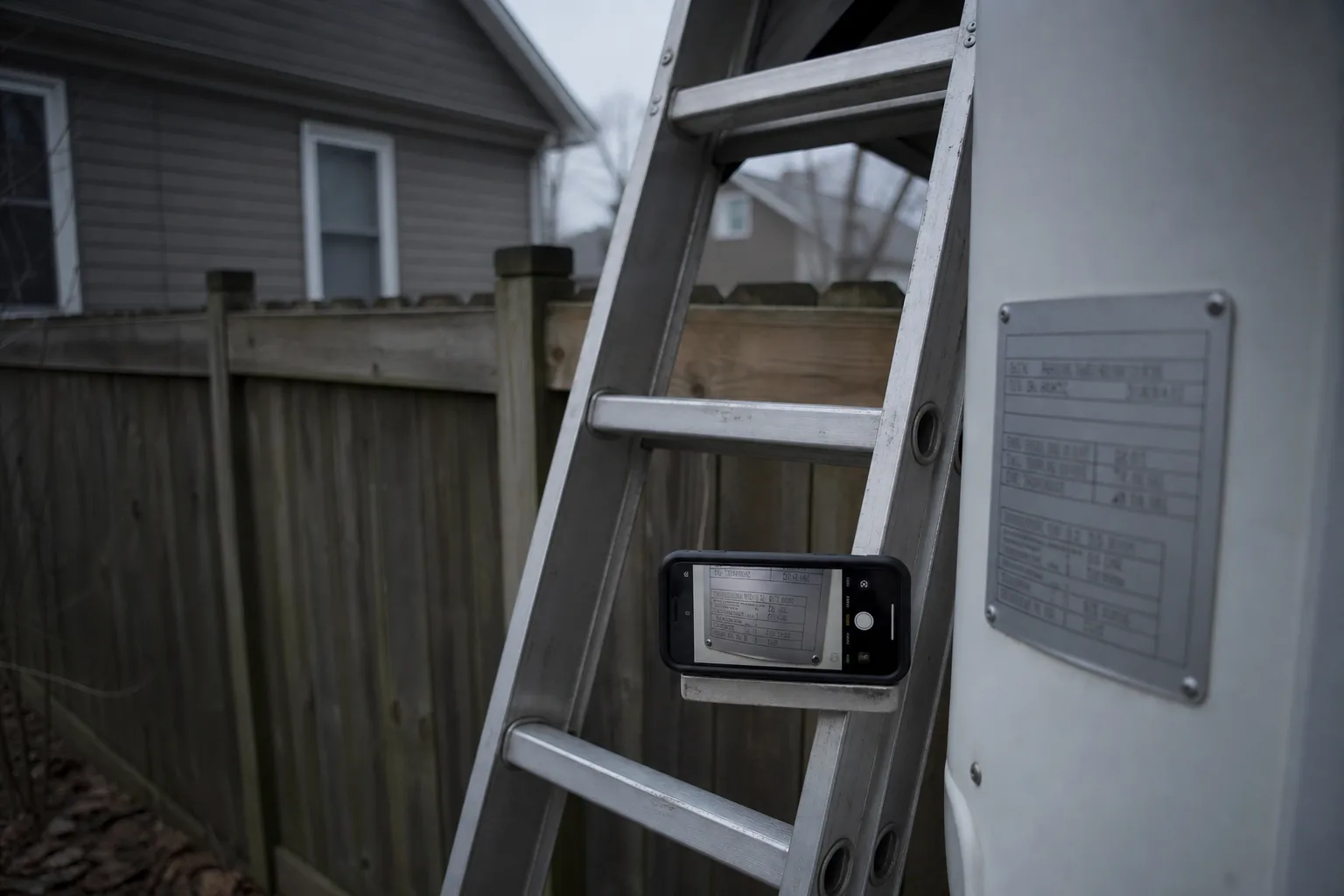
Two shifts matter for anyone keeping records. The first is that manufacturers have largely stopped shipping thick printed manuals and moved the full documentation, including parts diagrams, error codes and service intervals, to a model-number lookup on their own site. The second is that a growing group of states have passed repair-access laws, which has broadened what manufacturers publish for owners and independent technicians rather than only for authorized dealers. The practical effect is that the useful document is no longer the booklet you lost, it is the model and serial number you can photograph in ten seconds.
Warranty paperwork moved the same direction. Registration is usually a web form now, coverage terms are posted rather than mailed, and the record of your registration arrives as an email you will never find again unless you file it deliberately. The Federal Trade Commission is the agency responsible for consumer warranty disclosure rules in the United States, which is why the terms are written down somewhere findable at all. Save the confirmation, the terms as they read on the day you bought, and the receipt, because a warranty argument three years out turns on what the document said then.
One folder, four things in it
The folder can be a cloud drive, a shoebox, or both, and it needs four categories. Photographs of every data plate in the house: furnace, water heater, air handler, dishwasher, garage opener, well pump if you have one. Purchase and warranty records, filed by appliance rather than by date. A running log with one line per job, giving the date, what you did, what it cost, and what you noticed. And the contact list, meaning the technicians who have actually been inside your equipment, with the invoice numbers attached.
The log is the part people skip and the part that pays. It answers the question a service technician opens with, it tells you whether a recurring problem is recurring or new, and it is the difference between a homeowners claim supported by evidence of upkeep and a claim answered with a long-term-maintenance exclusion. A line of text costs fifteen seconds. Photograph the filter you removed and the log writes half of itself, because the image carries its own date and the folder carries the rest.
The tasks that involve the person next door
A meaningful share of exterior maintenance touches a boundary. The shared fence needs a post reset, the gutter run ends over the property line, the tree limb that drops into your gutters grows on their side, and the ladder has to stand on their grass for two hours. These jobs slip not because they are hard but because they require a conversation, and the conversation gets postponed until the job is urgent, which is exactly the moment a reasonable request starts to sound like a demand.
Solve it once, in writing, in the calm season. A short note or text that says what you plan to do, roughly when, how long access is needed, and that you will confirm a few days ahead converts a recurring negotiation into a standing arrangement. Keep the reply. If a fence or a wall is genuinely shared, note what was agreed about cost and repainting while nobody is annoyed, because a two-line record of a friendly agreement is what keeps the next owner of either property from starting over. Then put the access request on the calendar a week before the work, as its own entry.
Tools that hold up
Use the recurring calendar you already check daily rather than a dedicated app you will stop opening. Give each entry the trigger, the model number, the filter size, and the last date done, so the entry is the instruction sheet. Photograph the equipment tag once and stop looking things up. Keep an index card taped inside the utility closet door with dates written by hand, because the person standing there with a flashlight is not going to open a folder on a phone. Redundancy is not clutter here; it is what makes the record survive a new phone, a new insurer, and a new owner.
The schedule people keep is the one that asks for less memory and less courage. Triggers instead of dates, a photograph instead of a manual, a saved email instead of a search, and one polite note that settles the ladder question for the next several years.