Shared Wall, Shared Gutter, One Ladder. How to Build an Upkeep Routine That Survives a Real Week
Seasonal home maintenance checklists were assembled from warranty terms and insurer expectations, not from anyone's week. Here is how to rebuild one that holds.
The printed maintenance calendar taped inside a kitchen cabinet tends to have a common shape: twelve months, six to ten tasks each, a mix of filters, gutters, detectors, caulk and drains. Almost nobody finishes one. That is not a discipline problem, and treating it as one is how people end up abandoning the whole idea in March. The lists were assembled from documents written for other purposes, and they carry the assumptions of those documents. Understanding where each line came from is the first step in deciding which lines belong on your refrigerator and which belong in a drawer.
Where the standard checklist came from, and why it reads like a warranty document
Trace a typical annual list backward and you find three sources, none of which set out to describe a household's week. Manufacturers write service intervals to define the boundary of a warranty claim, so they specify frequency in months and say nothing about how long the task takes. Insurers describe maintenance in the language of a denied claim, meaning the tasks named are the ones that show up in water and fire losses. Municipal and utility programs add their own items, usually tied to a season or an inspection cycle. Stack the three and you get a calendar built from liability, not from Tuesday.
That origin explains the odd texture of these lists. A four minute job, replacing a furnace filter, sits beside a half day job, clearing gutters on a two story house, with no visual difference between them. It explains the vagueness too, since a warranty says annually because a year is a legal period, not because the thing degrades on a January to January cycle. Once you know the provenance of a line, you can judge it. Some items genuinely protect a claim, some protect equipment, and some were copied forward by a magazine editor in 1994 and have been reprinted ever since.
The week you actually have, and where a task can attach to it
The schedules that survive are the ones that stop asking for new occasions and attach themselves to occasions that already exist. Almost every household has a small number of fixed weekly events: the night the trash goes to the curb, the grocery run, the morning someone leaves early and the house is quiet. These are the anchors. A task hung on an anchor gets done because the anchor happens whether you plan it or not, and the task becomes the second half of something already in motion rather than a separate act of will.
In practice this means rewriting the list as attachments. Filters get checked on the first trash night of the month, because you are already walking past the utility closet with your hands full of something. Detector tests happen when the clocks change, which is the version of this idea that spread widely enough to become folk knowledge. Drain screens get pulled on whatever day the bathroom already gets cleaned. Nothing here is new advice about the tasks themselves. What changed is the unit of scheduling: not a date, but a recurring event you were going to have anyway.
Seasonal work follows the same logic at a larger scale. The first cold weekend, the first weekend after the last leaves drop, the weekend the air conditioning gets turned on for the first time: these are self announcing, and they arrive within a week or two of the same point each year. A schedule keyed to them does not require you to remember a date. It requires you to notice weather, which people do anyway.
The tasks that need a neighbor, and the week to raise them
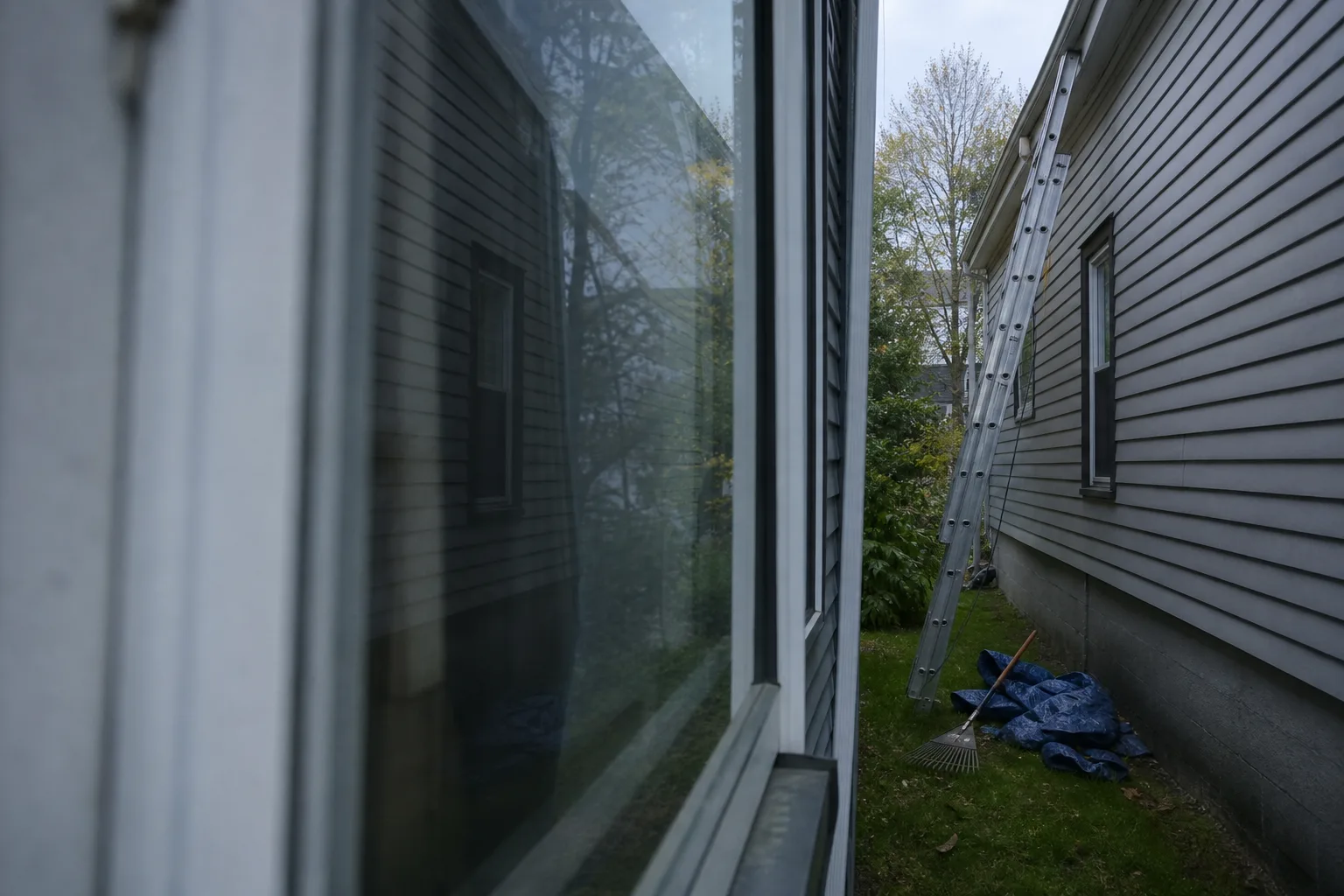
A meaningful share of exterior upkeep cannot be finished on your own property. Gutter work on a zero lot line house, painting a fence, servicing a shared retaining wall, running a ladder up a side elevation with four feet of setback: all of these need someone else to be fine with your presence, your ladder feet, and possibly your debris. This is the part of a maintenance schedule that fails silently, because the task never gets refused. It just gets postponed each time you look at the side yard and decide today is not the day to knock.
The fix is to schedule the conversation, not the task. Raise access in the ordinary week, at the mailbox or over the fence, well before you need it, and be specific about duration and cleanup: a Saturday morning, two hours, ladder on the grass not the beds, everything raked after. Asking early converts a favor into a plan, and a plan into a standing arrangement that repeats next fall without another negotiation. Neighbors who have agreed once are usually happy to agree again, and the second ask takes about a minute.
Shared systems deserve the same treatment on a longer cycle. If a wall, a drain line, a private lane or a party fence serves two households, the useful habit is one short conversation a year, at a predictable time, about what each of you noticed. That conversation is where small differences of opinion get settled while they are still cheap, and where the two of you can split a single visit from a contractor who was going to charge a trip fee either way.
Building it once, then leaving it alone
Set aside a single evening. Write down every recurring anchor in your week and your year, then take each item from whatever list you inherited and either attach it to an anchor, move it to a hire list, or strike it. The hire list matters as much as the keep list, because a task you have skipped three years running is a task you have already decided not to do yourself, and naming that is more useful than carrying it forward. The result will be shorter than the original, which is the point.
Two categories are worth protecting from the striking pen. Anything involving moisture and ventilation earns its place, since the Environmental Protection Agency treats indoor moisture and mold as a matter within its remit and the downstream costs are structural rather than cosmetic. Anything that a claim adjuster or a warranty administrator would later ask about also stays, because the cost of keeping it is minutes and the cost of losing it is a coverage argument.
A schedule built this way looks unimpressive on paper. Eight or ten recurring items, half of them attached to trash night, two of them requiring a word with the person next door in early October. It survives a bad month, which the twelve month grid never did, and it gets a house through a decade in better shape than the version that was printed, admired, and quietly ignored.