Shipping a Salvaged Mantel? What the Crate Costs and Who Pays If It Arrives Cracked
Crating, declared value and the packed-by-owner note on the inventory decide most of what a household pays when a fragile item travels and arrives broken.
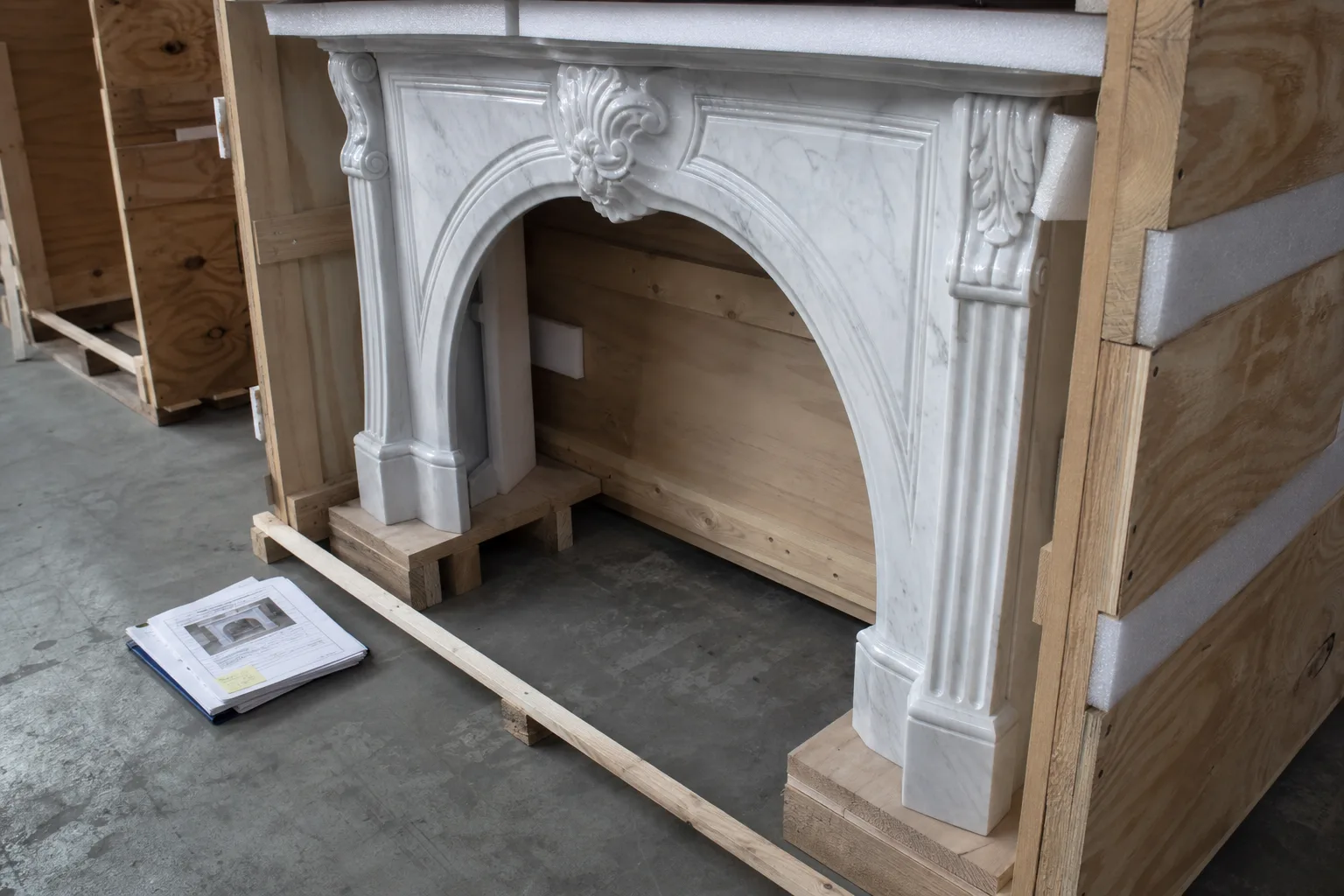
A marble mantel out of a 1902 house weighs somewhere between two hundred and five hundred pounds depending on the stone and the depth of the shelf, and it will travel perfectly well if it is crated properly and very badly if it is not. Households run into this every time an estate is cleared, a salvage lot is bought three states away, or a piece is moved rather than sold. The cost of getting it there is one problem. Who absorbs the loss when it arrives in three pieces is a separate problem, decided almost entirely by paperwork signed before the truck left.
The crate is labor, and labor is most of the bill
For anything fragile and heavy, the packing charge is not a materials charge. It is two people, a table saw, a supply of plywood and foam, and somewhere between one and several hours building a box to fit one object, with the stone or the glass floating inside on blocking so that road shock never reaches it directly. Materials are real but modest. The hours are the number that moves. Ask for the estimate broken into crate labor, materials, and freight, because a household comparing two quotes is usually comparing two different assumptions about how much carpentry the item needs.
Freight then prices by space rather than mass. A crated mirror that weighs sixty pounds and measures five feet by four feet by one foot will be billed on its dimensions, not its weight, because that is how carriers recover the cost of the floor it occupies. Oversize items often leave the parcel network entirely and go as freight, which introduces its own set of line items: residential pickup, residential delivery, liftgate service where there is no dock, inside delivery, and a delivery appointment so somebody is home. Each is a separate charge, and each is avoidable only by changing the circumstances that trigger it.
Two liability numbers sit on the same page
Interstate household moves are overseen at the federal level by the Federal Motor Carrier Safety Administration, and the structure it requires shows up on every bill of lading in the same shape. You choose between released value, which is the free option, and full value protection, which is not. Released value settles damage at a fixed rate per pound per article, conventionally sixty cents, which means a hundred-pound crated pier mirror destroyed in transit pays out sixty dollars. Confirm the figure on your own paperwork rather than assuming it. Full value protection obliges the carrier to repair, replace, or pay the replacement cost, subject to the valuation you declare and any deductible you accepted to lower the premium.
Parcel and freight carriers work differently but arrive at a similar fork. Each has a default liability per shipment, low enough to be irrelevant for anything worth crating, and each sells declared value above it, priced as a rate per hundred dollars of value with a minimum charge. The important distinction, and the one households miss, is that declared value is not insurance. It raises the ceiling on what the carrier will consider paying. It does not change the conditions under which the carrier pays at all, and those conditions are where claims are lost.
Who packed the box decides who pays for it
On a household goods inventory, cartons you filled yourself are noted as packed by owner, often abbreviated on the sheet. That notation matters more than the valuation you selected. A carrier that did not pack an item is generally liable for damage it can be shown to have caused through its own handling, such as a crushed carton or a visible drop, and not for damage attributable to how the contents were prepared. Since internal breakage in a box that arrives externally intact looks exactly like a packing failure, the practical result is that owner-packed fragile goods are difficult to claim on.
Parcel carriers make the same point in their terms as a packaging requirement, and a claim denial citing insufficient packaging is among the most common outcomes for fragile shipments. This is the one decision in the whole sequence that is cheap to get right. Paying the carrier or a third-party crating shop to pack the item transfers the packing question to them, and the receipt for that work is the document that keeps a later claim alive. For a single valuable object, professional crating typically costs less than the deductible you would carry on a comparable claim anywhere else in a household's insurance.
The five minutes at the curb that preserve the claim
Damage is established at delivery or it is argued about afterward. Before signing, walk the crate and note every dent, puncture, corner crush, and shifted band on the delivery receipt itself, not on a separate piece of paper, and photograph the exterior before anything is opened. If the item can be uncrated while the driver is present, do it. A notation of exception on the receipt shifts the conversation from whether the damage happened in transit to how much it costs to fix, and that shift is worth more than any argument made a week later from a garage floor.
Keep the crate and all the packing material until the claim closes, because inspectors ask to see it and its absence is treated as a gap. Household goods claims on interstate moves run on a defined clock: you have months rather than years to file, the carrier must acknowledge in writing within a set period, and it must pay or deny within a longer one. The exact intervals appear in your paperwork. File early in the window with the estimate, the photographs, and the crating receipt attached, and the file mostly handles itself.
Where a household's own coverage fits
Homeowners policies cover personal property away from the premises, but usually at a reduced percentage of the contents limit, and property in the custody of a common carrier is often excluded or narrowed. Read the off-premises clause before relying on it. For one appraised piece, a scheduled personal property endorsement or a short-term transit policy bought separately will cost a small percentage of the insured value and answer to you rather than to the carrier's liability rules. That independence is the point. Two claim routes for the same object is a materially better position than one.
The old-house pieces worth moving are the ones with no replacement, which is why the sequence runs backward from the usual instinct: decide the valuation, buy the packing, then price the freight. A crate built by someone whose name is on the receipt is the cheapest insurance in the transaction.