Shipping a Salvaged Marble Mantel Across Three States? Who Carries the Loss If It Cracks
A salvaged mantel travels through six pairs of hands between the yard and your hallway, and the paperwork signed before pickup decides who pays if it arrives in two pieces.
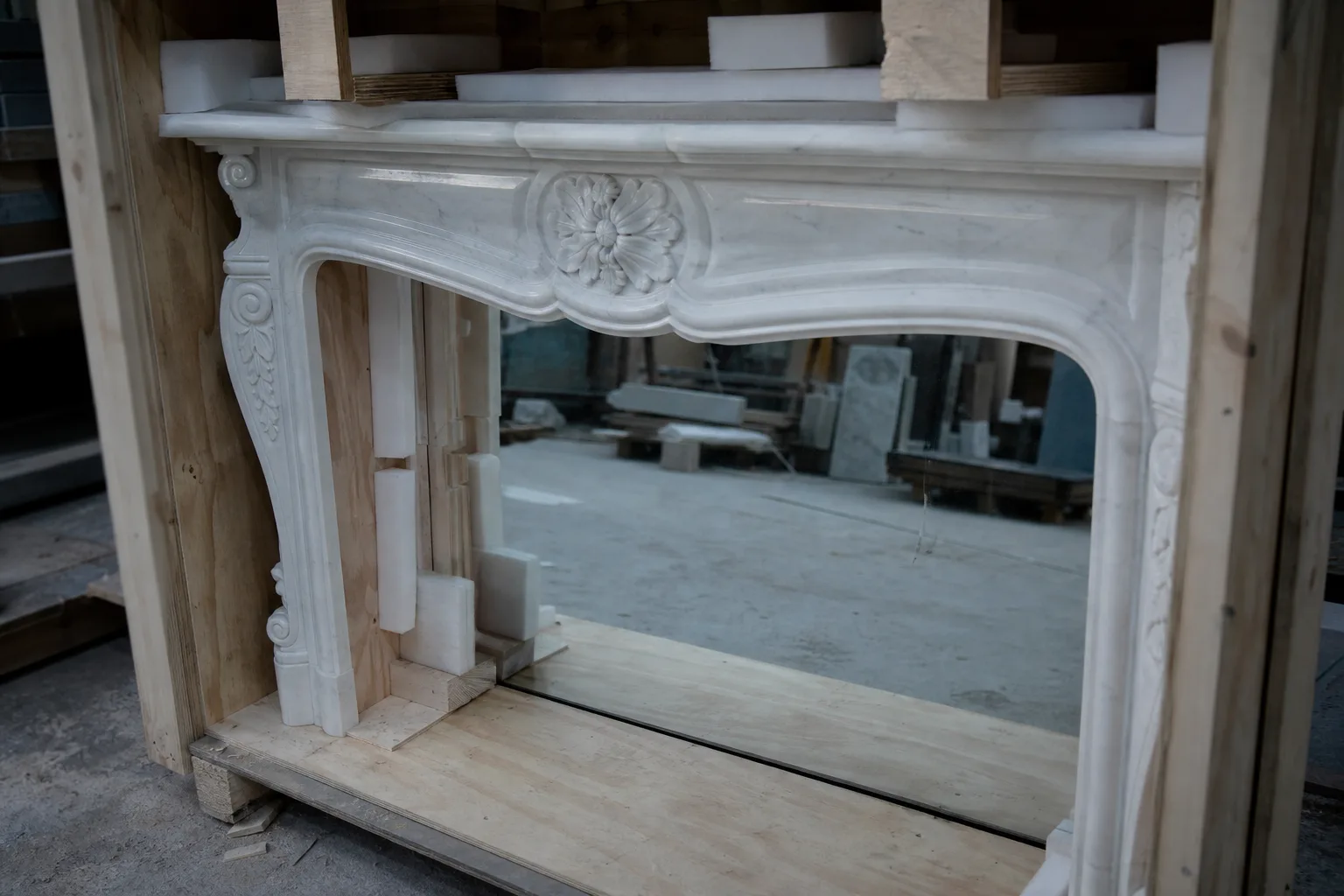
A marble chimneypiece pulled out of a 1901 rowhouse in Baltimore and sold to someone restoring a similar house in Ohio is one of the more instructive objects in freight, because it is heavy, brittle, irreplaceable and worth considerably less per pound than the tariff assumes. The purchase itself takes ten minutes. The three weeks that follow involve a crater, a freight broker, two terminal forklift operators, a linehaul driver, a delivery driver with a liftgate, and eventually a claims examiner who has never seen the piece. Every one of those people is working from a document somebody signed before the mantel left the yard.
Count the hands before you count the miles
Less-than-truckload freight is not a van that drives your crate from one address to another. The shipment is picked up locally, taken to an origin terminal, broken down, reloaded onto a linehaul trailer with unrelated freight, moved to a breakbulk facility, sorted again, and finally loaded onto a delivery route. A three-state trip can involve four separate loads and two forklift transfers, each one a moment when a 340-pound crate is lifted by someone who cannot see what is inside it and is paid for speed. The mileage is irrelevant. The transfer count is what damages stone.
This matters at the point of purchase, because it changes what you should ask the salvage yard. Yards vary enormously in what they do with a sold item: some hand it to you on a pallet with stretch wrap and call that shipping, others keep a woodworker on staff who builds crates all week. Ask specifically who builds the crate, whether they build it or subcontract it, and whether they will photograph the piece inside the crate before the lid goes on. A yard that answers those three questions crisply is a yard that has processed claims before and learned from them.
The crate is evidence, not just protection
A professional crater is doing two jobs at once, and the second one is the one people forget. The first is physical: a rigid box, blocking and bracing so the mantel cannot shift, foam or corner protection at the shelf and the returns, and orientation arrows that mean something. The second job is documentary. When a crate is built by a commercial packing company, the carrier cannot easily argue that the damage arose from inadequate preparation by the shipper, which is one of the standard defenses available under interstate carrier liability rules. Shipper-packed freight loses that argument routinely, and often deservedly.
So the photographs matter as much as the plywood. What you want, before the crate is sealed, is a set of images showing the mantel undamaged, the blocking in place, and the closed crate with its label and any handling markings. Ask for them by email rather than text, because a dated email thread is easier to produce nine weeks later than a phone that has since been replaced. If the yard will not photograph, hire a local crating company to collect the piece and do it properly. The cost sits somewhere between a few hundred dollars and a substantial fraction of a cheap mantel's price, and it is the cheapest insurance in the sequence.
Liability is priced at pickup, not argued afterward
Standard motor carrier liability is usually expressed as released value, a fixed dollar amount per pound, set by the carrier's tariff and by the freight class you shipped under. Do the arithmetic before you book. Take the crated weight, multiply it by the per-pound figure in the rate confirmation, and compare that number with what you paid for the mantel plus what shipping cost you. For dense stone the number sometimes lands close to the value, and for anything carved, rare or matched to a specific room it lands nowhere near it. Nobody at the carrier will run that calculation for you.
The two remedies are declaring a higher value with the carrier, which raises the freight charge and is quoted per hundred dollars of declared value, or buying separate transit coverage, sometimes written as an inland marine or shippers interest policy through the broker. Read what the second one excludes, because breakage of fragile items and inherent vice are common carve-outs and stone is exactly the argument that turns on them. The Federal Motor Carrier Safety Administration oversees interstate motor carriers and the framework within which these liability terms operate, which is why the terms look similar across carriers even when the numbers do not.
The delivery receipt is the last cheap moment
When the truck arrives, the driver wants a signature and has other stops. That signature, clean and unqualified, is a statement that the freight arrived in apparent good order, and undoing it later is expensive. Open the crate at the curb if the driver will wait, and if he will not, write a specific exception on the delivery receipt: crate corner crushed, lid split, banding broken, whatever is actually visible. Photograph the crate on the truck before it comes off. Concealed damage discovered after the driver leaves is claimable, but carriers impose a short notice window measured in days, and the clock starts at delivery.
A clean claim, in practice, is a small stack: the invoice, the crating photographs, the annotated delivery receipt, damage photographs taken before anything is moved indoors, and a written repair estimate from a stone conservator or monument shop rather than a general contractor. Keep the crate and the packing material until the claim closes, because inspectors ask for it. Assembled that way, a mantel claim is an ordinary administrative matter that resolves on documents rather than on argument.
The people who make this work are not glamorous: a yard clerk who photographs before sealing, a crater who blocks the shelf properly, a delivery driver who waits four minutes while you look. Choose the vendors who behave that way and the mantel usually arrives whole, which is the outcome all of this paperwork exists to make ordinary.