Six Units, One Laptop, One Easement Letter. What the Restore Attempt Actually Found
A small condo association thought its records were backed up until a neighbor's fence made it check, and the restore revealed what a copy is not.
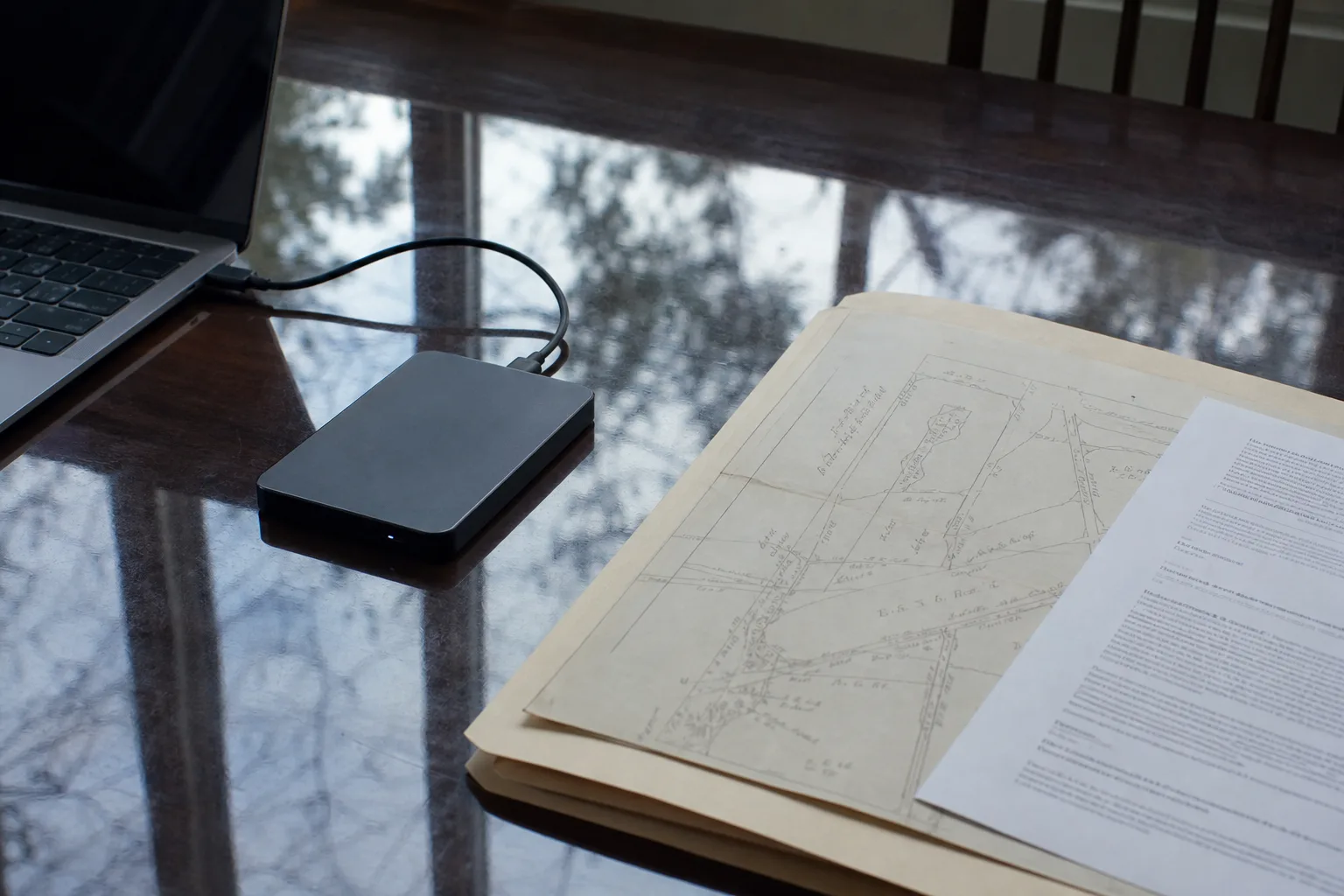
The dispute that eventually tested the backup had nothing to do with computers. A six-unit association shared a driveway with the house next door under an easement signed in the early 1990s, and when the neighbor put in a fence that narrowed the turning space at the rear, the only question that mattered was what the easement actually said about width. Nobody had read it in years. The treasurer kept the association's records on a laptop, the laptop synced to a cloud folder, and everyone had assumed for a long time that this arrangement counted as a backup.
The document that mattered was the oldest one in the folder
Current records were easy. Minutes from the last three years, the reserve study, the insurance declarations page, the vendor contracts: all of it opened on the first click, because all of it had been created or touched recently. The easement letter and the survey attached to it had been scanned once, filed once, and never opened again. That is the pattern worth noticing, because the documents a household or an association most needs to produce under pressure are almost always the ones least recently used, and recency is exactly what casual sync arrangements protect best. A file you edit weekly is effectively self-testing. A file you scanned in 2016 is not.
When the fence went up, the board asked the treasurer for the scan. It was listed in the folder, with the right name and a plausible file size, and it would not open. The PDF reader reported a damaged file. So did a second reader on a different machine. The sync service had faithfully replicated a corrupted file across every device, which is what sync is designed to do, and had been doing it for long enough that the version history offered nothing older than the damage.
What the restore attempt actually found
The board then went looking for the backup everyone believed existed. There was an external drive in a closet, last connected at some point the treasurer could not date. It powered on. The folder structure was there, the file names were there, and the easement scan on that drive opened cleanly on the second attempt, after a false start when the drive dismounted mid-copy. The association got its document, and the fence conversation with the neighbor resolved in about two weeks once both sides were reading the same page. But the near miss was the useful part, because the outcome had turned on a drive nobody had checked and a copy nobody had opened.
The distinction that emerged is worth stating plainly. A copy is a file that exists somewhere else. A backup is a copy you have restored from, opened in the software that made it, and confirmed to be the thing you thought it was. Between those two states sits every failure mode that matters: silent corruption carried forward by sync, version histories too shallow to reach past the damage, encryption keys stored only on the device being backed up, and drives that spin up once and never again. None of these announce themselves. All of them are visible the first time someone actually tries a restore.
The difference between adequate and good is a rehearsal
A barely adequate job looks like the association's original setup: one live copy, one automatic mirror, a drive in a closet, and a general confidence that the arrangement is covered. A good job looks almost identical from the outside and differs in four habits. Copies live in more than one place, with at least one of them off-site or offline so that a fire, a theft or a ransomware event cannot reach all of them at once. Version history runs deeper than the interval at which someone might notice a problem. Restores are rehearsed on a schedule, not attempted in an emergency. And the rehearsal is written down, with a date and a name, so the next board knows when it was last true.
The rehearsal itself is undramatic. Pick two files at random, weighting toward the old and the rarely touched, restore them to a different machine than the one that made them, and open them in the relevant application. Confirm that a scanned document renders, that a spreadsheet's formulas survive, that a password-protected archive can actually be unlocked with a password someone still has. The National Institute of Standards and Technology is responsible for the federal government's cybersecurity guidance, and the principle it has long pushed toward organizations of every size is the same one that applies to a six-unit board: recovery is a capability you verify, not a product you buy.
What changed next door, and what changed on the board
The association now keeps three copies of its records, does a two-file restore test each spring alongside the insurance review, and logs the test in the minutes in a single sentence. The easement letter and the survey were rescanned at higher resolution, and a paper original went into a fireproof box at the treasurer's unit with a second set held by the board secretary. The neighbor, for the record, was reasonable throughout. He had never seen the easement either, and the board's ability to produce it within days rather than weeks kept a boundary disagreement from hardening into a survey, a demand letter and a year of frostiness across the driveway.
That is the practical argument for testing backups in a residential setting, where the documents are few and the stakes arrive without warning. The value shows up not as data recovered but as a conversation that stayed short.