Three People Called Adjuster and One Works for You. What Changes at the State Line
Staff adjusters, independent adjusters and public adjusters answer to different parties and different state rules, and old buildings sharpen every one of those differences.
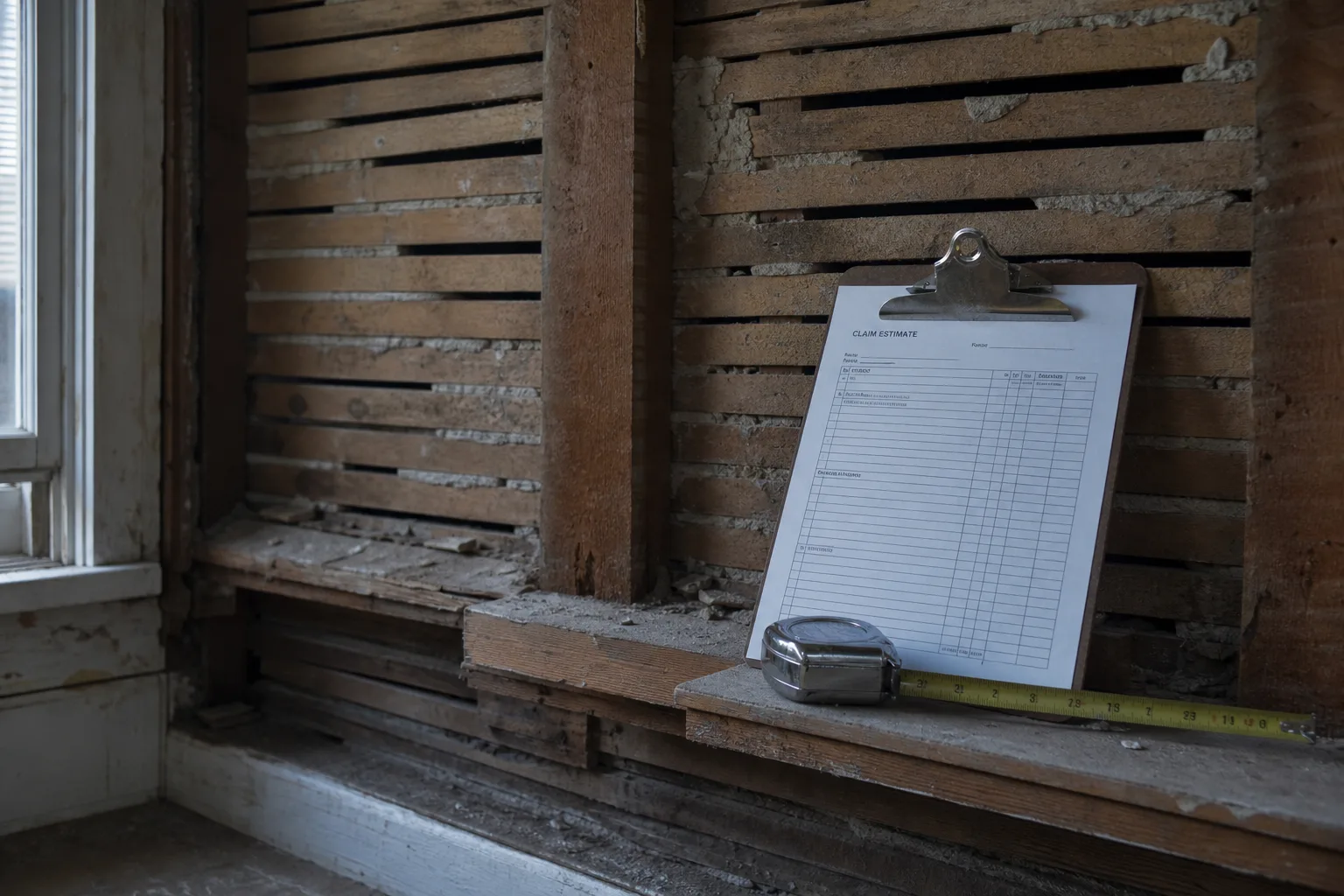
The card handed to you on the front steps says adjuster, and that single word covers three arrangements with different loyalties, different licenses and different rules about what can be charged. On a house built in 1912, with plaster over wood lath, a chimney that was relined at some point nobody documented, and a wing added when the codes were thinner, those differences stop being procedural and start deciding the scope of repair. Which one you are talking to is worth establishing in the first five minutes, because it changes how you should prepare, and what protections you can rely on later.
Three arrangements, and who each one answers to
A staff adjuster is an employee of your insurer, salaried, working the file inside the company's own claims procedures. An independent adjuster is a contractor the insurer hires when volume spikes, usually after a regional storm, and though the letterhead differs the client is still the carrier. A public adjuster is retained by the policyholder, works on a fee, and represents your side of the valuation. All three are licensed in most states, and all three owe duties, but only the third owes them to you. Establishing which arrangement is in front of you sets everything that follows.
The practical difference shows up in what each person is authorized to decide. A staff adjuster often carries settlement authority to a stated dollar level and needs approval above it. An independent adjuster typically writes an estimate and recommends, with the carrier retaining the decision, which is why answers sometimes take a second pass. A public adjuster negotiates, documents and argues, but cannot approve anything. Asking directly, at the first visit, how much authority sits with the person taking photographs will tell you whether you are talking to the decider or the reporter, and that shapes how much detail is worth pressing on day one.
Licensing, fee caps and cancellation windows change at the state line
Public adjusting is regulated state by state, and the variation is real rather than cosmetic. Most states license public adjusters, require a bond or surety, and impose written contract requirements; a small number restrict or effectively bar the practice. Several states cap the percentage a public adjuster may charge, and some set a lower cap for claims arising from a declared catastrophe, on the reasoning that storm claims should not carry a premium price. Many states also give the policyholder a right to cancel a signed public adjuster contract within a short window measured in days. Ask which cap and which window apply before signing.
Independent adjusters face their own patchwork. Some states license them and some do not, and after a major event several states issue emergency or temporary licenses so out of state adjusters can work the surge. That is normal and lawful, but it means the person measuring your roof may be three weeks into working in your state, unfamiliar with local building requirements, and reading your ordinance provisions for the first time. The remedy is unglamorous and effective: ask where they are licensed, how long they have worked claims in your jurisdiction, and whether they have handled a house of your age and construction.
Where old construction turns a rule into money
Two provisions decide most disputes on older houses, and both are read against local rules. The first is matching, sometimes reached through a state regulation or bulletin on uniform appearance, which governs whether a carrier owes replacement of a whole slope, wall or run of siding when the original material is no longer made. The second is ordinance or law coverage, which pays the extra cost of complying with current code when a damaged element is rebuilt. Knob and tube wiring, ungrounded circuits, undersized joists and unvented roof assemblies were all normal once, and each becomes a code upgrade when opened.
Local rule enters twice more. Municipalities and counties differ on the threshold at which repair triggers full compliance, often expressed as a share of the structure's value, and in a designated historic district a preservation commission may require in kind materials, wood windows repaired rather than replaced, slate rather than asphalt, that cost multiples of the standard line item. A well prepared adjuster on either side will ask for the district designation and the commission's guidelines up front. Bringing the guidelines to the first inspection, with the parcel's designation in writing, moves that conversation from argument to arithmetic.
Deadlines, appraisal and the flood exception
Prompt payment rules are among the sharpest regional differences. Many states set statutory periods for acknowledging a claim, completing the investigation and paying an undisputed amount once agreed, with interest or penalties attached to a carrier that runs past them. Those clocks are not uniform, and the count sometimes runs from proof of loss rather than first notice, which is why the date you submitted documentation is worth recording precisely. Where a dispute is genuinely about amount rather than coverage, most policies contain an appraisal clause: each side names an appraiser, the two select an umpire, and the resulting decision binds on value.
Flood is its own system. Claims under the National Flood Insurance Program, which the Federal Emergency Management Agency oversees, are adjusted by adjusters holding a separate flood certification, on standard federal policy language, with proof of loss requirements and deadlines that do not match the homeowners policy sitting in the same folder. Some states restrict who may be paid a fee on a federal flood claim. If your house took both wind and water, expect two files, two adjusters, two sets of rules, and keep the documentation separated from the first day so the allocation between them can be shown rather than argued.
Matching the arrangement to the loss in front of you
For a contained loss with an obvious cause and modern finishes, the staff adjuster route usually settles cleanly and a public adjuster's fee will outrun the improvement. For a large loss on an older building, particularly one involving code upgrades, matching questions, or a historic district review, a public adjuster or an experienced independent estimator retained on your behalf tends to earn the fee through scope rather than argument. Where the disagreement is purely numerical, appraisal is often faster and cheaper than counsel. Read the fee cap, the cancellation window and the state deadline first, then choose.
The document that settles all of this is the one you already hold. Read the loss settlement provision, the ordinance or law limit and the appraisal clause together, note the state in which the policy was issued, then have the conversation. An adjuster who came prepared for an old house will welcome the specificity.