Weighing Up Three Training Formats? Compare the Calendar and the Fee Schedule, Not the Tuition
Full-time cohort, evening part-time, self-paced online: what separates a well-run training program from a barely adequate one is usually written into the schedule and the fee page.
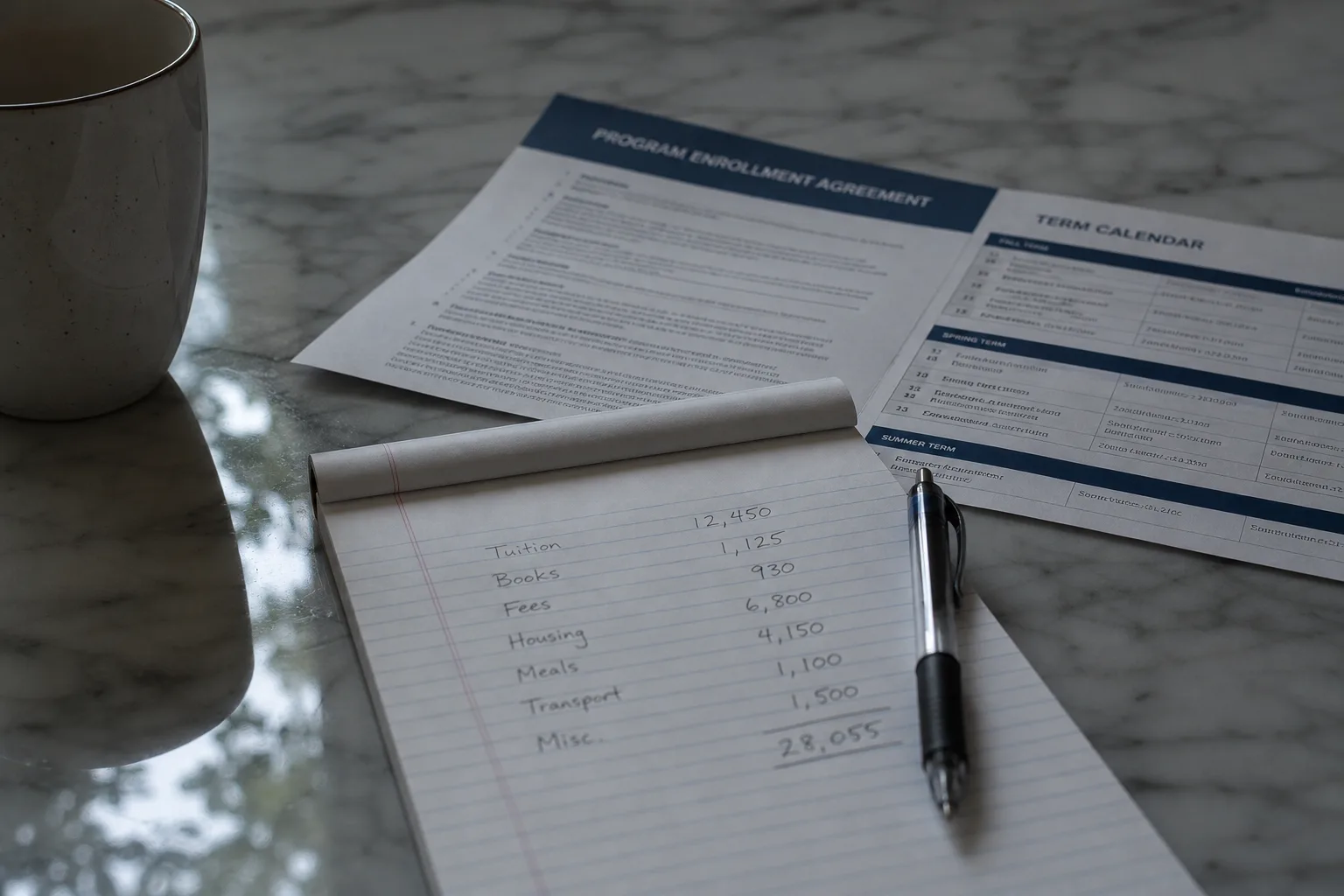
Three programs can teach the same curriculum, sit the same students for the same credential, and differ by a factor of two in what they actually cost a first-time enrollee. The tuition line is rarely where the difference lives. It lives in the calendar, in the fees that sit outside tuition, and in the attendance rules that decide whether a missed week costs you an afternoon or a term. A first-timer compares the three tuition numbers because those are the figures printed largest. The people who have done this before compare the schedules.
The clock hours are fixed, the calendar is not
Most occupational programs are built around a required number of instructional hours, set by a state board or an accrediting body rather than by the school, and that number does not move between a full-time cohort, an evening track, and a self-paced online version. What moves is how long you carry the obligation. The same total hours can be compressed into four months of weekday mornings or stretched across fourteen months of two evenings a week. Both are legitimate. They are not interchangeable, because one of them asks you to give up income for a season and the other asks you to give up evenings for more than a year.
The question to put to an admissions office is plain: how many clock hours, and over how many calendar weeks, at what days and times. A well-run program answers in one sentence and sends a term calendar. A barely adequate one answers with a range, says the schedule depends on enrollment, and tells you cohorts start monthly. Monthly starts sound accommodating. They often mean the schedule is assembled after you have paid, which is the point at which your leverage is gone.
What sits outside the tuition line
Tuition is the number the program controls. The fees that follow are frequently set by somebody else, and that is exactly why they get left off the first page. Expect, depending on the field, an application fee, a registration fee charged each term, books and a digital access code, tools or a kit, uniforms, a background check, immunization records, liability insurance for a clinical placement, and the examination fee paid to the credentialing body rather than to the school. None of those are unreasonable. What varies is whether you were told about them in writing before you signed, or discovered them one at a time.
Ask for a total cost of attendance that names every line and says who collects it. A good program hands over a single sheet, with the examination fee listed at the published amount and a note on whether a retake is included. A barely adequate one quotes tuition, mentions that books are extra, and leaves the rest to emerge. The gap between those two documents is routinely larger than the gap between the tuition figures you were comparing, which is why the comparison has to be run on totals.
Attendance, make-up work, and the refund schedule
Because clock hours are a requirement rather than a suggestion, missed time has to be recovered somewhere, and the policy on recovery separates a serious program from a careless one more reliably than any facility tour. The useful version states a maximum absence, describes how hours are made up, names the cost of a make-up session if there is one, and says what happens if you exceed the limit. The weak version says attendance is mandatory and stops there. You want the second paragraph, the one that tells you what mandatory means in practice when a child gets sick in week six.
The refund schedule deserves the same reading. Enrollment agreements typically set out how much tuition is returned if you withdraw in the first week, the first month, after the drop date, and so on, often on a prorated basis tied to hours delivered. Read it before you sign rather than after, because it is the only part of the paperwork that assumes the arrangement might not work out. A program willing to walk you through its own withdrawal terms without flinching is telling you something about how it handles the rest.
Who places you, and who signs for your hours
In fields with a clinical rotation, externship, or supervised practice requirement, the single most consequential difference between programs is whether the school places you or expects you to find your own site. Placement is work. It involves an affiliation agreement with the host employer, a supervisor willing to sign hours, and scheduling that fits the hours into the host's operation. A program that does this has staff assigned to it and will tell you the names of recent sites. A program that does not will describe the requirement as an opportunity for you to build industry relationships.
Self-paced online formats are where this matters most, because the classroom portion genuinely can be done at your own speed while the supervised portion cannot. The Department of Labor oversees registered apprenticeship standards, and the structure it is built on, paid work under a named supervisor with hours recorded as they are earned, is a useful benchmark to hold any program against. Ask who records your hours, in what format, and whether the credentialing body has already accepted that format from this school. The answer is either immediate or it is a problem waiting for you in month nine.
Running the comparison on paper
Reduce each option to five figures and one date: total clock hours, calendar weeks to completion, tuition, all other fees added together, and the income you expect to forgo while attending, plus the date of the next genuine start. Put them side by side and the ranking usually changes from the one you had after reading three websites. The cheapest tuition frequently carries the longest calendar and the largest unnamed fees. The expensive full-time cohort sometimes finishes a year earlier and includes the examination fee.
Ask for all of it in writing, and ask before you pay a deposit rather than after. Programs that are well organized find the request ordinary, because they have the document already.