Who Actually Sets the Hours on Your Legal Bill? The Title Examiner You Never Meet
A flat fee for a closing or a boundary matter is quoted against a file assembled by someone else, and on an old house that file is the whole story.
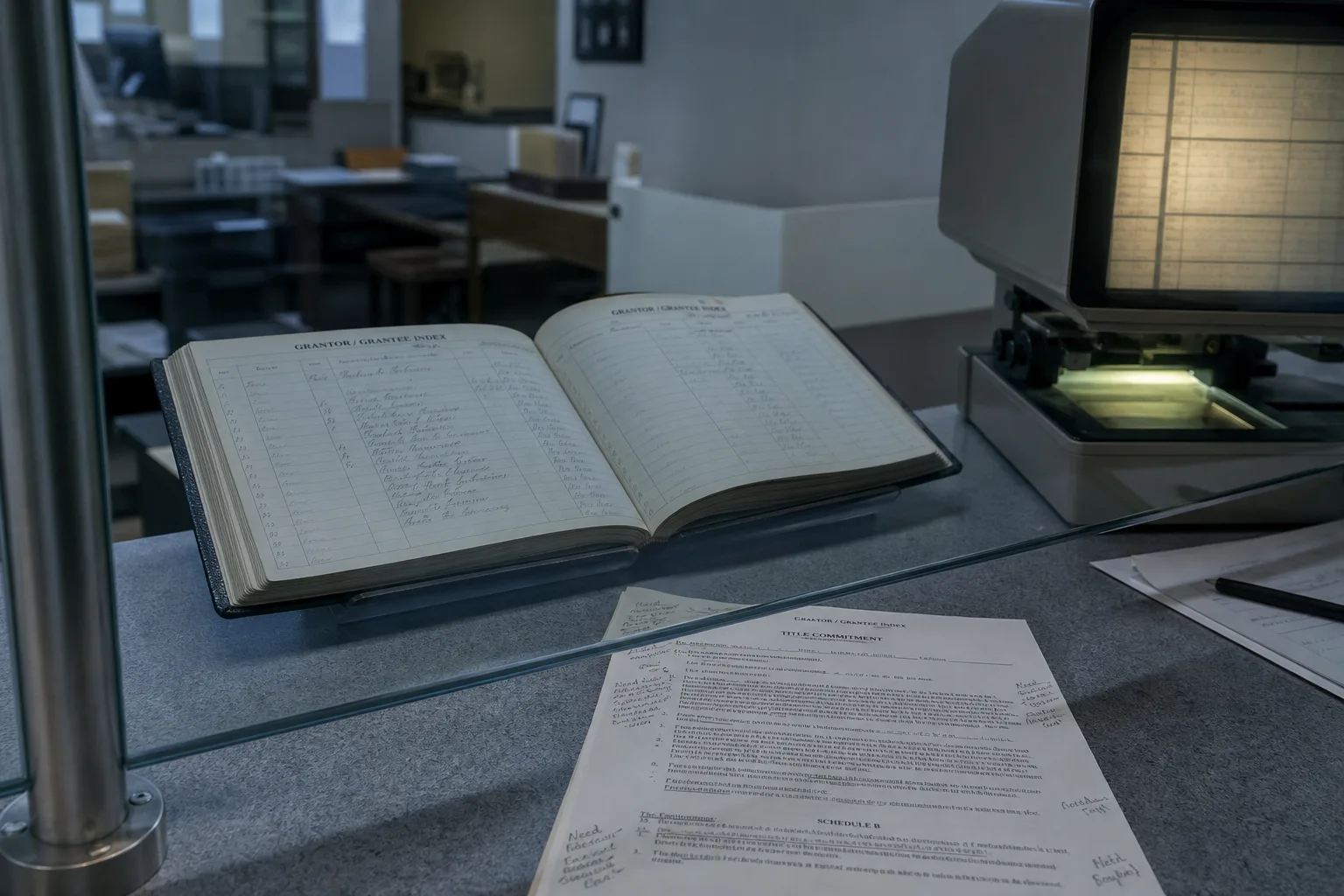
An attorney quoting a fee for a residential closing, a boundary correction, or an easement release is not pricing your house. They are pricing a file, and on the day the number is given, that file usually does not exist yet. What exists is an assumption about it: a chain of title that runs clean, a survey that matches the deed, a lender who wants nothing unusual, and a seller's counsel who returns calls. Every one of those assumptions belongs to someone other than your attorney, and on a building put up before the Second World War, at least one of them tends to be wrong.
The fee is quoted against a search that has not been run
Ask an attorney how the flat fee was arrived at and the honest answer is an average of past files that looked like yours. That is a defensible way to price work, and it is how most transactional legal fees are set, but averages hide their tails. The number assumes a title search that returns a normal set of exceptions, meaning recorded easements, utility rights, and a mortgage that will be paid at closing. It assumes nothing turns up that has to be researched, explained to an underwriter, or cured by an instrument somebody has to draft. The quote is a bet on the search, placed before the search.
The person running that search is a title examiner or abstractor, working either inside a title company or on contract to one. Most buyers never learn this person's name, never speak to them, and see their work only as a title commitment: a few pages listing what the policy will and will not cover. That document is the single largest input into how many hours your attorney spends. A commitment with four standard exceptions is a two-hour review. A commitment with eleven exceptions, three of them referencing instruments recorded in the 1920s and described only by book and page, is a different job entirely.
What an old building does to the search
A house built in 1912 has had roughly a century of paper laid on top of it, and the paper reflects what was normal at the time rather than what is normal now. Lots were split and recombined. Party wall agreements were signed between neighbors and never referenced again. Coal chutes, shared drives, and rights of way to a rear stable were recorded in language that assumes everyone involved knew the ground. Mortgages were satisfied in fact but never released of record, so the lien still sits in the index. None of that is a defect in the house. All of it is billable time, because somebody has to read the old instrument, decide whether it still binds, and persuade an underwriter of the answer.
The abstractor also inherits the recording practices of the county at the time, which vary more than most buyers expect. Some jurisdictions have indexed everything back to the nineteenth century and made it searchable; others have a grantor-grantee index on microfilm and a clerk who knows where the gaps are. Where the index is thin, the search takes longer and returns less certainty, and the attorney's file absorbs the difference. This is why identical houses in adjacent counties can generate fees that are not identical, and why a quote given without knowing the county is a guess with confidence attached.
The other overlooked parties: the clerk, the underwriter, the surveyor
Behind the examiner sit three more people whose pace you are paying for. The county recorder's office controls how fast an instrument gets on record and, in some places, whether a document is rejected for a formatting reason that costs a week. The title underwriter, who is not the same as the local title agent, decides whether an old easement can be insured over or must be cured, and that judgment is made by someone in an office you will never visit. The surveyor, if one is needed, produces the document that either matches the legal description or does not, and a mismatch on an old lot is common enough that experienced attorneys quietly price for it.
Settlement services of this kind sit within the remit of the Consumer Financial Protection Bureau, which oversees how closing costs are disclosed to borrowers in a federally related mortgage transaction. That disclosure regime is the reason you get an itemized breakdown separating the attorney's fee from the title search fee, the examination fee, the recording fee, and the premium for the policy itself. Read the itemization as a map of who is doing what. Charges that appear under a title company's name are the work that determines how much of the attorney's estimate holds.
How to make the quote mean something
Before you accept a number, ask what the fee assumes and what falls outside it. Most attorneys will tell you plainly: a clean commitment, no more than one round of curative work, no litigation, no boundary dispute, and hourly billing beyond that at a stated rate. Ask what the last three old-house files in that county actually cost, and whether the overage came from title, survey, or the other side. Then ask who is running the search and whether it can be ordered early, because a commitment in hand two weeks before you are committed converts a guess into a quote. On a building with a long paper history, that single step is the difference between a fee you agreed to and a fee you were handed.
The examiner's work arrives as a boring document with a lot of book-and-page citations. It is the most useful thing you will read in the file, and the cheapest hour of legal time you will ever buy is the one spent going through it line by line before anything is signed.